Thursday, March 7th, 2019 (
No comments yet)
The Register has an article about a bogus Vista activation key generator, but lists this interesting bit near the end:

The latest attack exploits Vista's System Locked Pre-installation 2 (SLP2) mechanism, technology which allows Microsoft's favoured hardware partners to avoid users having to activate their Vista installs. SLP2 combines an OEM specific certificate along with markers in the machine's BIOS and an appropriate product key.
The hack involves creating a BIOS emulator that serves up the correct BIOS data when needed. Used in combination with the appropriate OEM certificate and product key this defeats the activation mechanism. Information on the OEM certificates and other information needed for the hack to work are available. Withdrawing the affected keys in order to defeat the hack would likely upset Microsoft's OEMs.
Tags:
Big Business,
Microsoft,
Windows,
Windows Vista
Thursday, March 7th, 2019 (
No comments yet)
Spychips author Katherine Albrecht has warned of RFID being put into things like paper, clothing, stamps etc. and it looks like the technology is
catching up with the theory.
Also this excerpt from Popular Science explains it in more detail actuallly referencing the use of these RFID chips in money.
For years, radio-frequency identification, or RFID, tags have been used to track everything from highway tolls to pets, but only Hitachi’s newest tag is skinny enough to fit inside a dollar bill. Just 0.15 millimeter square and 7.5 microns thick, it’s a mere 1/15 the size of the next smallest RFID chip. And it can do everything its predecessors can. Hitachi’s tags store up to 128 bits of data—including prices, serial numbers and places of origin—that radio scanners can read from more than 10 feet away.
RFID chips typically use thick metal guard rings to insulate their circuitry. The insulation limits electrical interference but makes the tags too bulky for thin products such as paper. Hitachi’s weight-loss solution is to remove the rings and separate the circuits into individual wells coated with a thin insulating layer of silicon dioxide.
So far, the new insulation trick has worked perfectly. An earlier version of the chip successfully debuted in tickets for the 2005 World Exposition in Aichi, Japan, as a way to stop counterfeiters, and a new, even slimmer version could appear in European and Japanese currency within the next few years. When that happens, banks and businesses can simply scan the tagged bills to confirm their authenticity or trace their origins.—Elizabeth Svoboda
Tags:
Big Brother,
Big Business,
RFID
Thursday, March 7th, 2019 (
1 comment)
The Register reports that Diebold has hurt its relationship with customers and election officials with their pathetic voting machine fiasco.
Negative publicity about the voting machines - such as the HBO documentary Hacking Democracy - has cast a shadow over the 150-year old company, analysts say. Until its move into e-voting, the firm was better known for its safes and automated teller machines.
Which, of course, anyone would now question the ATMs as well. The article goes on to speculate that Diebold may try to sell off the division… if anyone would buy it.
Tags:
Diebold,
Evoting
Thursday, March 7th, 2019 (
No comments yet)
This is probably the best summary of who the RIAA is and what they stand for that I've ever heard:
The RIAA is like the Prohibitionists of old. In their view, the law cannot allow for something completely reasonable such as legal circumvention because it could be abused. Millions of people are thereby punished. Yet this is not how a civil society typically functions. Life is full of potentially dangerous products, services, and ideas. It's up to individuals to take responsibility for their actions, because we all know that catering to the lowest common denominator does not give birth to a free society, let alone an intelligent one. Yet the RIAA will stop at nothing to make sure that you and I never have the chance to make such decisions for ourselves.
By "legal circumvention", he refers to the the practice of circumventing Data Rights Management (DRM) for legal purposes such as making personal backup copies, educational uses, and other Fair Use practices. The RIAA is against it because they know that all it takes is one user with a DRM-free copy to post a song online for it to be shared everywhere in the world.
Tags:
Fraud Waste and Abuse,
RIAA
Thursday, March 7th, 2019 (
No comments yet)
Information Week asked six of its readers to give them a review of Windows Vista and the results weren't good.
Problems to date are mostly driver related. I am having all sorts of problems with power management (can't wake up out of Sleep, system starts up in the middle of the night for no identified reason, restart/shutdown often hangs). From what I've been able to find, there are apparently known issues (unresolved) with ASUS/nVIDIA drivers? This problem is really a pain!
Whoah, back up. Starts on its own?!
Tags:
Microsoft,
Windows,
Windows Vista
Thursday, March 7th, 2019 (
No comments yet)
From this page:
Most people don't care about DRM... until it interferes with the Right to Fair Use. If you buy any other product... be it a gun, a car, a chainsaw, a pen, or a knitting needle... you can do whatever the hell you want with it... because it is yours. DRM-protected content is the only product out there that prevents you from doing absolutely anything except for the original intent of the product. If I want to be able to move it to another machine that I own, shrink it for a handheld device, edit out the commercials (all things that the Right of Fair Use allows)... whatever... forget it. And THAT is what makes normal people mad about DRM.
Yup
Tags:
DRM,
Microsoft,
Windows
Thursday, March 7th, 2019 (
No comments yet)
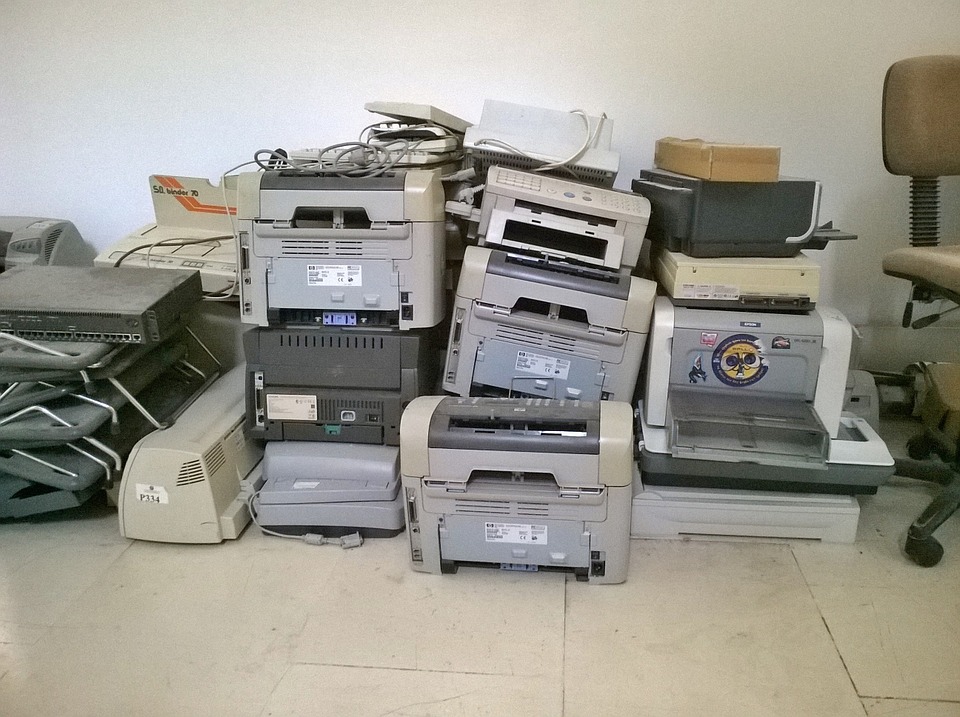
Did you know that many new printers print "tracking dots" that encodes information in everything you print? They are nearly invisible, but can be used by law enforcement or others to specifically identify what printer printed any photo or document.
Since they don't openly disclose this "feature", be sure to stop by the EFF's guide to which printers come with tracking dots and which don't before you choose your next printer.
Tags:
Big Brother,
Big Business,
Tracking Dots
Thursday, March 7th, 2019 (
No comments yet)
Recent polls show that Google is the most popular search engine by far. Depending on the rater, Google served between 50 and 70 percent of all web searches with Yahoo running from 15 to 30 and MSN at around 6 percent. The Microsoft number is the one that interests me.
Overall, the rankings have to be cause for concern for Google's competitors. Microsoft, in particular, has to be shaking its head. The company has been aggressively pursuing the web search market, completely revamping what is now known simply as Live Search. No matter what Microsoft does when it comes to search, it seems that Google has an answer and the bigger Google gets, the harder it will be for the competition to close the gap.
If they're shaking their heads, then something is wrong. It's no secret why Google is on top. They're simple, they're clean (very few ads of any kind and all are text based instead of flash), and they WORK! I barely have a bookmarks folder anymore because I only need to enter a few search terms to get right to any page I want (most of the time).
Even if another company can replicate the results, I will avoid them and recommend others do to when there's an option like Google where you don't have to be harassed by ads.
Tags:
Google,
Search Engines
Thursday, March 7th, 2019 (
No comments yet)
You already know that RFID chips can be easily cloned (which is really embarrassing when a company has implanted one into you because it's supposed to be more secure that way…). Now, one company is trying to silence a researcher from presenting his demonstration of how it's done at the upcoming Black Hat conference. Fortunately, an ACLU lawyer will step up and present instead.
Tags:
Accountability,
RFID