Friday, March 8th, 2019 (
No comments yet)
This article talks about a company who designs workplace monitoring software. This isn't new technology, but the reason I point it out is how human they make these guys seem. Check out the Star Wars and Battlestar Galactica references 😀
Tags:
Big Business
Friday, March 8th, 2019 (
No comments yet)
A company who's trying to seel their solution to the TSA is out to prove that the no-fly list is bogus. By going to their site, you can enter a name and see if you have a good chance of being on the no-fly list yourself. Hopefully, enough people will try this and see what a stupid idea it was for the TSA to have done this based on names alone.
Tags:
Security Theater,
TSA
Friday, March 8th, 2019 (
No comments yet)
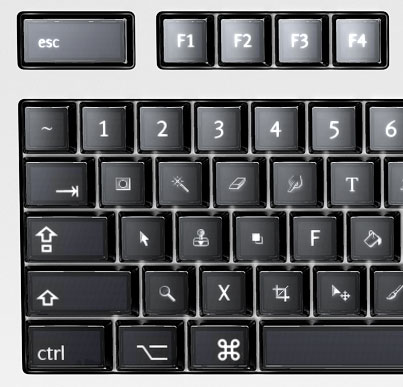
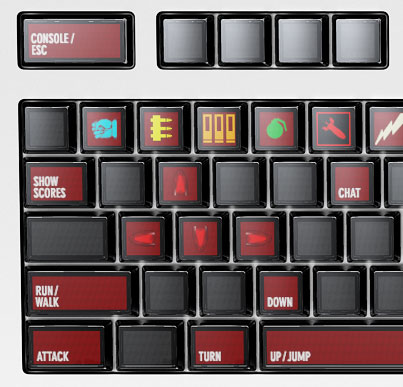
I’ve seen this around before, but apparently, they’re getting closer to releasing it. What is it? A keyboard where the keys are made of tiny displays so the keyboard can change to suite the application that you’re using. Just go check it out and you’ll see what I mean.
|
|
Optimus keyboard in PhotoShop mode
|
Optimus keyboard in Quake mode
|
Update
Apparently due to price concerns, they’ve scaled back on the features and a lot of people are really mad about it. Of course, there’s obviously a lot of interest so maybe even if this product doesn’t make it, a competitive model probably will.
Tags:
Neat Toys,
Optimus Keyboard
Thursday, March 7th, 2019 (
No comments yet)
Microsoft has now admitted that their software validation tool will check in with Microsoft servers even if you tell it not to.

But if you cancel the installation of WGA, maybe because you dislike the privacy implications, the software will still phone home. Microsoft stresses that WGA does not take any information which could identify you as an individual, but is only used to collate statistics on WGA use.
Who cares if it can't personally identify you (if that is indeed true)? The point is that you are not in control of your own software. For those non-technical among us who have always wondered by geeks hate Microsoft, it's because of stuff like this.
(Update:) ArsTechnica expands on this saying that this behavior is typical of ANY software distributed through Windows Update.
Tags:
Big Business,
Microsoft,
Microsoft Visa
Thursday, March 7th, 2019 (
No comments yet)
Apple is laughing all the way to the bank with the release of Vista. In their recent ad campaign, you see two people where one represents a Mac and the other a PC. One of the more accurate ones describes the new security "features" of Vista that prevents you from doing nearly anything without constant warnings and dialogue boxes. It may be tounge-in-cheek, but it's pretty close to the reality.
It's stuff like this that make people turn off security features just so they can get work done.
Tags:
Macintosh,
Microsoft,
Utter Failure,
Windows,
Windows Vista
Thursday, March 7th, 2019 (
No comments yet)
The Mac website is tearing Vista to shreds listing how many of its "cool features" have been in Max OS X since 2001. As I'm reading the nearly snide snickering articles about why Mac is (and has always been in their opinion) better than PCs, I noticed one important thing about the upcoming Leopard system.
Apparently, they plan to have a type of content management built into the OS which means that if you open a file to find it corrupted or accidentally made changes you didn't intend and saved it, the Operating System will let you "go back in time" to see earlier versions of that document.
This is not the same as Windows' System Restore feature that keeps backups of your system files, this is for each individual file and can be accessed without system restart.
Tags:
Apple,
Macintosh,
Microsoft,
Windows
Thursday, March 7th, 2019 (
No comments yet)
The Register has an article about a bogus Vista activation key generator, but lists this interesting bit near the end:
The latest attack exploits Vista's System Locked Pre-installation 2 (SLP2) mechanism, technology which allows Microsoft's favoured hardware partners to avoid users having to activate their Vista installs. SLP2 combines an OEM specific certificate along with markers in the machine's BIOS and an appropriate product key.
The hack involves creating a BIOS emulator that serves up the correct BIOS data when needed. Used in combination with the appropriate OEM certificate and product key this defeats the activation mechanism. Information on the OEM certificates and other information needed for the hack to work are available. Withdrawing the affected keys in order to defeat the hack would likely upset Microsoft's OEMs.
Tags:
Big Business,
Microsoft,
Windows,
Windows Vista
Thursday, March 7th, 2019 (
No comments yet)
Spychips author Katherine Albrecht has warned of RFID being put into things like paper, clothing, stamps etc. and it looks like the technology is
catching up with the theory.
Also this excerpt from Popular Science explains it in more detail actuallly referencing the use of these RFID chips in money.
For years, radio-frequency identification, or RFID, tags have been used to track everything from highway tolls to pets, but only Hitachi’s newest tag is skinny enough to fit inside a dollar bill. Just 0.15 millimeter square and 7.5 microns thick, it’s a mere 1/15 the size of the next smallest RFID chip. And it can do everything its predecessors can. Hitachi’s tags store up to 128 bits of data—including prices, serial numbers and places of origin—that radio scanners can read from more than 10 feet away.
RFID chips typically use thick metal guard rings to insulate their circuitry. The insulation limits electrical interference but makes the tags too bulky for thin products such as paper. Hitachi’s weight-loss solution is to remove the rings and separate the circuits into individual wells coated with a thin insulating layer of silicon dioxide.
So far, the new insulation trick has worked perfectly. An earlier version of the chip successfully debuted in tickets for the 2005 World Exposition in Aichi, Japan, as a way to stop counterfeiters, and a new, even slimmer version could appear in European and Japanese currency within the next few years. When that happens, banks and businesses can simply scan the tagged bills to confirm their authenticity or trace their origins.—Elizabeth Svoboda
Tags:
Big Brother,
Big Business,
RFID
Thursday, March 7th, 2019 (
No comments yet)
Recent polls show that Google is the most popular search engine by far. Depending on the rater, Google served between 50 and 70 percent of all web searches with Yahoo running from 15 to 30 and MSN at around 6 percent. The Microsoft number is the one that interests me.
Overall, the rankings have to be cause for concern for Google's competitors. Microsoft, in particular, has to be shaking its head. The company has been aggressively pursuing the web search market, completely revamping what is now known simply as Live Search. No matter what Microsoft does when it comes to search, it seems that Google has an answer and the bigger Google gets, the harder it will be for the competition to close the gap.
If they're shaking their heads, then something is wrong. It's no secret why Google is on top. They're simple, they're clean (very few ads of any kind and all are text based instead of flash), and they WORK! I barely have a bookmarks folder anymore because I only need to enter a few search terms to get right to any page I want (most of the time).
Even if another company can replicate the results, I will avoid them and recommend others do to when there's an option like Google where you don't have to be harassed by ads.
Tags:
Google,
Search Engines
Thursday, March 7th, 2019 (
No comments yet)
You already know that RFID chips can be easily cloned (which is really embarrassing when a company has implanted one into you because it's supposed to be more secure that way…). Now, one company is trying to silence a researcher from presenting his demonstration of how it's done at the upcoming Black Hat conference. Fortunately, an ACLU lawyer will step up and present instead.
Tags:
Accountability,
RFID


