Wednesday, June 27th, 2007 (
No comments yet)
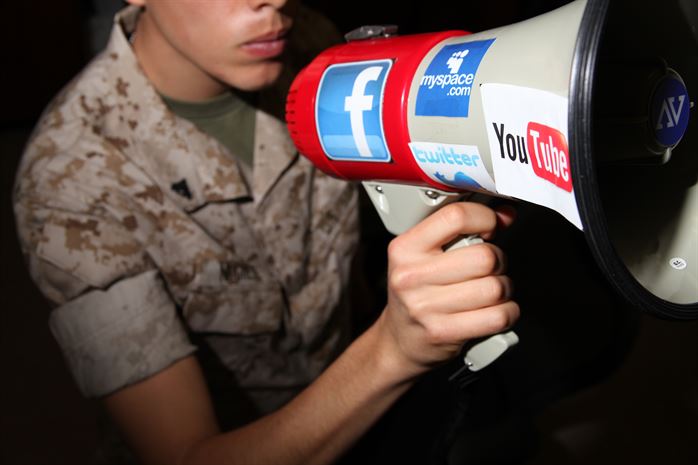
Facebook is a Myspace-like social networking site that was originally designed to be accessible only be members of schools and universities (which was verified by .edu email addresses). It has
recently opened to the general public probably in order to become more competitive against Myspace.
In the latest news, Facebook is actively seeking buyers advertising the data they hold as being the “most valuable data in the history of the media world”.
Now let’s look at the data they hold again: tons and tons of vital information on teenagers and young college students. It’s sick, but yeah, big business would salivate to have all that data in their clutches.
The Lesson
Remember that even if the site you signed up for promises to protect your data, that doesn’t mean it always will. Privacy policies can change without notice.
Tags:
Families,
Police
Saturday, March 16th, 2019 (
No comments yet)
Ars Technica reports on a proposed law in NC that will require parents to sign up for social networking sites (like MySpace) and become age verified before their kids would be allowed to sign up.
This is probably the best way I've heard of to prevent under-age kids from signing up and had the added benefit that the parents will have to know that their kids are using the sites. That way, parents are held accountable too.
Tags:
Families,
Kids,
MySpace,
Social Network Sites
Friday, March 15th, 2019 (
No comments yet)
Some of the consumer groups have published a new report documenting some of the marketing practices aimed at kids. Like this one:

KFC used a high-pitched tone as a promotional "buzz" device for a recent "interactive advertising campaign." The MosquitoTone™ was embedded in TV commercials to launch KFC’s new "Boneless Variety Bucket™." In its press release, the company explained that the popular cell phone ring tone "is too highpitched for most adults to hear because most people begin to lose the ability to hear high frequency tones starting at age 20. This is a fact not lost on young Americans who seek the sound for clandestine ring tones that don’t turn the heads of nearby adults."
Tags:
Families,
High Pitch Tone,
KFC,
Kids,
Scams - Ripoffs - Dirty Tricks
Thursday, March 14th, 2019 (
No comments yet)
If you aren't watching your rates or if you don't understand what you're paying, you could end up with a huge cell phone bill by handing a teen a cell phone with text message capability.
Tags:
Families,
Scams - Ripoffs - Dirty Tricks
Thursday, March 14th, 2019 (
2 comments)
This stuff drives me crazy. I really, really hate companies who target kids in this way.
Tags:
credit,
Families,
Kids,
LIFE Game
Tuesday, March 12th, 2019 (
No comments yet)
Tantrum turns to police record.
She flailed away at the teachers who tried to control her. She pulled one woman’s hair. She was kicking.
Unless the kid has a knife or some other kind of weapon, nothing they can do could be counted as dangerous.
Desre’e was charged with battery on a school official, which is a felony, and two misdemeanors: disruption of a school function and resisting a law enforcement officer. After a brief stay at the county jail, she was released to the custody of her mother.
So your kid has a felony and two misdemeanors on record from the time they're 6? What was wrong with the normal way, calling her mother? So now this poor girl, her mother, the community, and most of the Internet all have less respect and trust for police officers. Great work Florida.
Tags:
Families,
Kids,
Police,
Security Theater,
Utter Failure
Tuesday, March 12th, 2019 (
No comments yet)
For those who weren't paying attention, fears of child abduction and abuse are fairly overblown.
Although statistics show that rates of child abduction and sexual abuse have marched steadily downward since the early 1990s, fear of these crimes is at an all-time high. Even the panic-inducing Megan's Law Web site says stranger abduction is rare and that 90 percent of child sexual-abuse cases are committed by someone known to the child. Yet we still suffer a crucial disconnect between perception of crime and its statistical reality. A child is almost as likely to be struck by lightning as kidnapped by a stranger, but it's not fear of lightning strikes that parents cite as the reason for keeping children indoors watching television instead of out on the sidewalk skipping rope.
Why is this important? Because companies that want humans to accept RFID implantation will try to use fears of child abduction to sell their products. The industry wants this badly (and possibly the government too), because once people begin implanting children, no one will get them removed as adults and eventually, every citizen will have them. Once we are all tagged, we can be tracked wherever we go and whatever we do.
Tags:
Big Brother,
Big Business,
Families,
Market Lies,
Police,
RFID,
RFID Implant
Sunday, March 10th, 2019 (
No comments yet)
This is new.
Boyd writes: "By breaking up through MySpace comments, the heartbreaker is attempting to assert their view for everyone else to see so that they cannot be accused of saying something else in private."
Makes sense to me. Less emotionally involved, less likely to say or do something you'll regret. Still pretty cold though.
Tags:
Families,
Kids,
MySpace
Sunday, March 10th, 2019 (
No comments yet)
Sunday, March 10th, 2019 (
No comments yet)
Public Citizen reports that the Consumer Product Safety Commission has begun a service that will notify consumers by e-mail of any product safety recalls. While some manufacturers will do this voluntarily, some won't and even if they do, they usually ask for you to register all your products (including loads of personal information you don't want to give).
For example, Selina Patten, of Manassas, Va., had a close call when the recalled plastic nail from a Playskool toy tool bench became lodged in the throat of her 3-year-old daughter. She was able to remove the nail before serious injury occurred. She later discovered the product had been recalled after the death of two toddlers, though she did not hear about it.
Here are some of the common recalled product lines:
* Outdoor products: such as grills and outdoor furniture for porch or patio
* Outdoor power equipment: air compressors and gas pool heaters
* Children’s products: outerwear with drawstrings, necklaces that contain lead, battery packs for toy vehicles, and flashing pacifiers
* Power tools: cut-out tools, nailers, circular saws and pressure washers
* Household products: fans, candles
* Electronics: computer batteries, remote controls
Note: This requires no registration of any kind! You do not have to tell them what products you have and the only personal information (if you can call it that) that they ask for is an e-mail address. There's also very little chance of them spamming you since they are a government agency.
Tags:
CPSC,
Families,
Product Safety