•

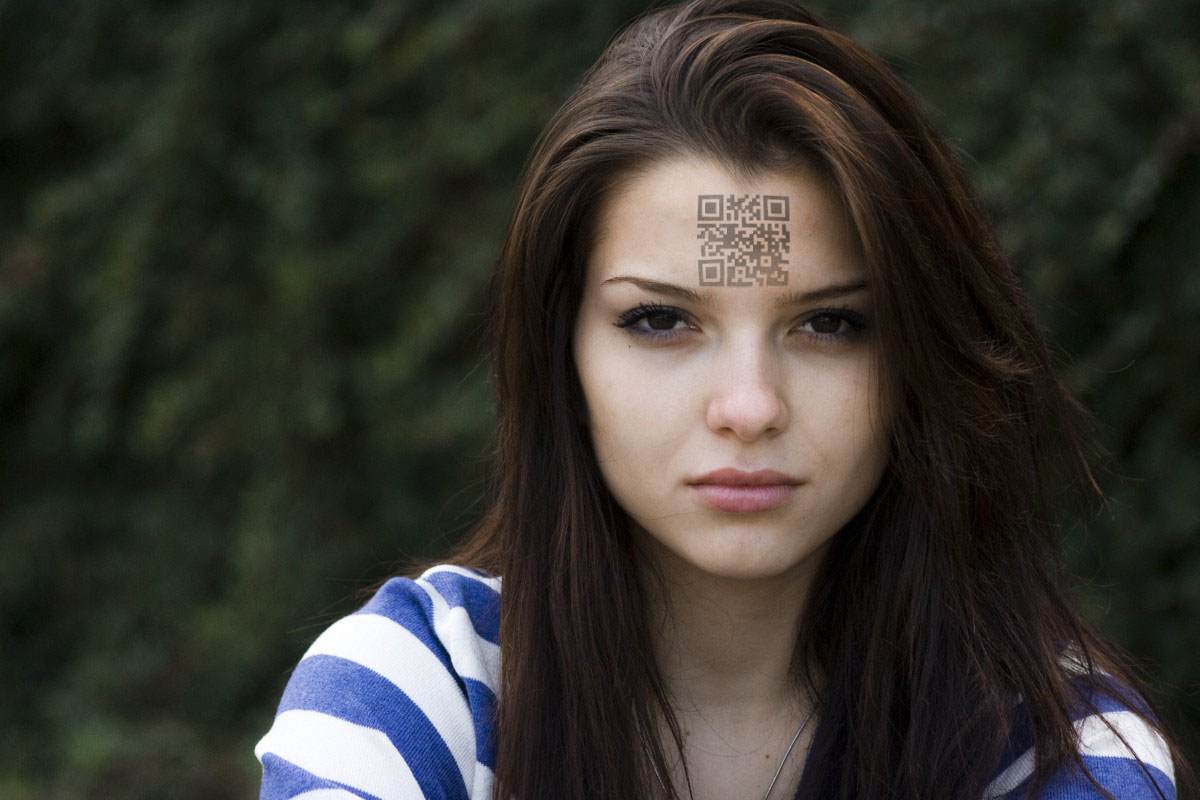
Verichip, Accident or Fraud?

(Image used under: Creative Commons 2.0 [SRC])

CASPIAN warns that Verichip, the ones who have brought the human-implant RFID to the market had to publish a report of risks associated with the technology to satisfy the Securities and Exchanges Commission before they could IPO. In almost 20 pages of risks (holly clap!) they still neglected to mention that their RFID chips can be cloned… easily. So much for their claim to "tighten security in facilities like nuclear power plants".

"Potential investors should be told how a hacker can simply walk by a chipped person and clone his or her VeriChip signal, a threatdemonstrated by security researcher Jonathan Westhues months ago," says McIntyre, who is a former federal bank examiner.

And most creepily:

The VeriChip implant is a glass encapsulated RFID tag that is injected into the flesh to uniquely number and identify individuals. The tag can be read by radio waves from a few inches away. The highly controversial device is being marketed as a way to access secure areas, link to medical records, and serve as a payment instrument when associated with a credit card or pre-paid account.

So you get to be tagged like an animal with something you can't get rid of without surgury, and because your credit card information is in it, all someone has to do to steal your identity is stand near you for a few seconds. Wonderful.

Let's be clear about this: Human implantation of RFID is the most dangerous development in technology ever created. I really need to write an article about this sometime…

Tags: , ,

RFID Myth Busted – That Was Fast…

RFID can actually be read secretly from great distances.
(Image is in the Public Domain)

Of the proponents of RFID, one of their strongest defenses was, "but RFID can only be read from a few inches away, so it can't every be a problem…."

CASPAIN's newsletter points to this article showing that one company is using RFID to let drivers change the messages on billboards over 500 feet away! For perspective, an American football field is 300 feet long.

Tags: ,

RFID Sensor Network Tested in Denmark

Tracked and tagged. At an amusement park.
(Image used under: Creative Commons 2.0 [SRC])

If you thought it was hype and paranoia, you were wrong. Not only CAN they create a sensor network to track people with RFID, but they're doing it right now. Denmark's Lego Land puts bracelets on kids that lets them be monitored by the park's many sensors.

Says Katherine Albrecht of spychips.com:

On the safety side, we can't help wondering why parents would let children wander off by themselves armed only with only a tracking device, rather than watching them with their own eyes. If a child is so young or irresponsible that his parents want to fit him with an electronic nanny, what he probably really needs is for those parents to hold his hand and pay attention to him instead. Alienating, authoritarian technologies only contribute to an alienated, cowering populace, whether the setting is an amusement park, a school, a hospital, a birthing center, or a home.
Tags: , , ,

Schneier Supporting Security Theater?

Security theater is the term Bruce Schneier uses to describe a security measure that doesn’t actually improve security as much as it makes us feel more secure. While he disagrees with most uses, he allows that sometimes, feeling better is a good thing. For example, hospitals that put RFID bracelets on newborns that will trigger an alarm if they go through the wrong doors helps reassure new mothers when the babies are out of their sight.

Granted, this is only harmless because there’s no real security problem that is being covered up.

Tags: ,

RFID Tattoos for Soldiers

Uh. Oh." (Image used under: Creative Commons 2.0 [SRC])

Hmm…. Prime cuts of meat… and military personnel. In the same sentence. I realize that military people have a reduced set of rights compared to civilians, but they deserve respect, not to be tagged like a piece of meat.

"It could help identify friends or foes, prevent friendly fire, and help save soldiers' lives," he said. "It's a very scary proposition when you're dealing with humans, but with military personnel, we're talking about saving soldiers' lives and it may be something worthwhile."

Tag our soldiers with wireless beacons? Sez one militant to another "That guy looks American." Other: "Yeah, I scanned his chip, he is". First Militant: "Ok, let's shoot him".

Tags: , , ,

PASS Card Has RFID Too

Sunday, March 3rd, 2019 (No comments yet)
Privacy, US Goverment
Is there anything that doesn't have RFID anymore?
(Image used under: Creative Commons 2.0 [SRC])

EPIC reports that the Department of Homeland Security is creating a passport-like system that will be required for travelers between the US, Canada, Mexico, the Caribbean, and Bermuda. This "passport" will contain RFID and very little security. From the article:

The federal government has been increasingly using RFID technology in its identification documents. The Department of Homeland security last year began using RFID-enabled I-94 forms in its United States Visitor and Immigrant Status Indicator Technology ("US-VISIT ") program to track the entry and exit of visitors.19 This year, the State Department began issuing RFID-enabled passports to U.S. citizens.20 Only 23% of U.S. citizens have passports.21 Therefore, under the Western Hemisphere Travel Initiative, U.S. citizens would have to carry either a passport, which costs $97 for first-time applicants, or a PASS card. As the proposed Western Hemisphere Travel Initiative PASS card, U.S. passport, and US-VISIT I-94 entry and exit forms all contain RFID chips, if the PASS card proposal is adopted, then all U.S. citizens carrying either a passport or PASS card and visitors entering the country through US-VISIT will be able to be tracked using RFID technology.
Tags: , ,

Spy Coins?

Sunday, March 3rd, 2019 (No comments yet)
Because we really needed another way to be spied on...
(Image used under: Creative Commons 2.0 [SRC])

CNN posted an article about tiny transmitters embedded in some Canadian coins and planted on contractors with security clearance. From the article:

In a U.S. government warning high on the creepiness scale, the Defense Department cautioned its American contractors over what it described as a new espionage threat: Canadian coins with tiny radio frequency transmitters hidden insidee. Experts were astonished about the disclosure and the novel tracking technique...

Okaaaaay…. So, this is "creepy", and "novel"? First of all, coins can be given away very easily thus defeating the point of tracking the recipient. Second, the metal of the coin will inhibit the transmitters. Third, tracking technology already exists and is being used now. It's called rfid and it's already being put into our merchandise and even our clothes. Basically, it's much worse than coins.

Tags: , ,

RFID Passports Still Broken – Only Faster Now

Sunday, March 3rd, 2019 (No comments yet)
Privacy, Security, US Goverment
Wireless data is easy to steal. Why did we put it on our passports again?
(Image is in the Public Domain)

Schneier links to an article about RFID passports being cloned in under 5 minutes. The authorities have stopped denying it's possible and have shifted to denying that it can be used for any nefarious purposes.

The UK Home Office however dismissed the ability to get hold of the information on the chip. A spokesman said: "It is hard to see why anyone would want to access the information on the chip. " Other than the photograph, which could be obtained easily by other means, they would gain no information that they did not already have - so the whole exercise would be pointless: the only information stored on the ePassport chip is the basic information you can see on the personal details page."

Well, it sure is hard to see why anyone would want to see someone's credit report, criminal history, medical information, social security card, birth certificate… Are these people for real?

Tags: , , ,

cNet.com – Homeland Security chief defends Real ID plan

Sunday, March 3rd, 2019 (No comments yet)
Privacy, US Goverment

cNet writes:

WASHINGTON–U.S. Department of Homeland Security Secretary Michael Chertoff on Thursday defended forthcoming national ID cards as vital for security and consistent with privacy rights.

From the article:

"Do you think your privacy is better protected if someone can walk around with phony docs with your name and your Social Security number, or is your privacy better protected if you have the confidence that the identification relied upon is in fact reliable and uniquely tied to a single individual?" Chertoff asked rhetorically.

Has anyone heard of false dilemma before? This is where you are presented with two choices when there are actually many. One choice is always extremely horrible to make the other seem reasonable. An example could be, "Would you rather put RFID in your credit cards or have a horde of violent viking warriors destroy your home and burn your family?"

False Dilemma choices are sometimes used accidentally, but are often a dirty trick to force people into agreeing or looking bad. Defeating them is only a matter of recognizing them when they're used and calling them out.

Bottom line, do I have much trust that the government who brought us the RFID passport disaster and broken e-voting will get it right this time? No… no I don't.

Tags: ,

Tracking People by RFID in their Shoes

Saturday, March 2nd, 2019 (No comments yet)
Privacy, Security, Technology
(Image used under: Fair Use doctrine)

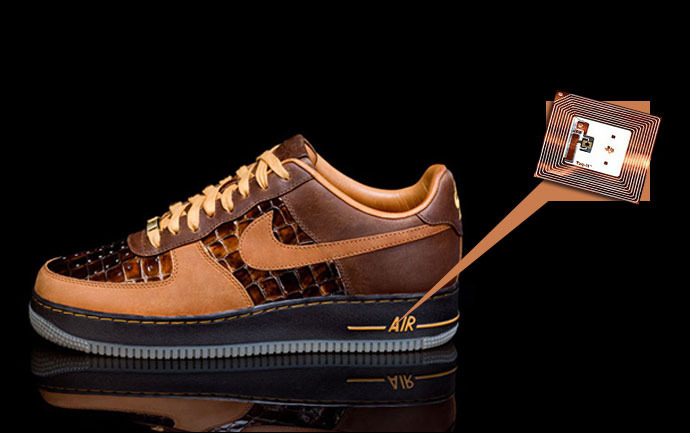
In Schneier's blog today, he writes about a University of Washington study explaining how to track people using their Nike+iPod Sport Kit (which uses RFID).

This is a great demonstration for anyone who is skeptical that RFID chips can be used to track people. It's a good example because the chips have no personal identifying information, yet can still be used to track people. As long as the chips have unique IDs, those IDs can be used for surveillance.

Schneier goes on to say:

To me, the real significance of this work is how easy it was. The people who designed the Nike/iPod system put zero thought into security and privacy issues. Unless we enact some sort of broad law requiring companies to add security into these sorts of systems, companies will continue to produce devices that erode our privacy through new technologies. Not on purpose, not because they're evil -- just because it's easier to ignore the externality than to worry about it.

Couldn't have said it better myself.

Tags: , , ,

Loading...

If you want to learn more about my professional background, click here to learn more.

Check out one of my guides/tutorials:

web posting dangers Tutorial
|INDEX|next: Spyware Scanners
Chat, Instant Messaging, Forums, and Internet Blogs are fun, but make sure you post carefully.
Sometimes spyware gets in your computer and the anti-virus won't stop it. Use a spyware scanner to find and remove spyware and adware.
Use a software firewall to detect bad code on your computer when it tries to connect to the Internet.
Always keep your system up to date with security patches or none of the rest of your security software will matter.
Use an encryption tool to protect your important data when storing or transmitting it.
Switch to Firefox for your web browsing and you'll be better protected from Internet threats.

... or check out any of my other guides and tutorials by clicking here!

Spyware Scanners

Learn how to detect and remove spyware and adware using a free scanning tool.

[Click for full description]

Software Firewall

Learn what a firewall is and why you want one on your computer.

[Click for full description]

Operating System Updates

Make sure to keep your operating system up-to-date with security patches or else none of the rest of your security software will be able to protect you.

[Click for full description]

File Encryption

Learn how to protect your important files on your computer or when transmitting them with free tools for file encryption.

[Click for full description]

Mozilla Firefox - Internet Browser

There are many browser choices out there. Read why I think Firefox is one of the best.

[Click for full description]