Thursday, March 14th, 2019 (
No comments yet)
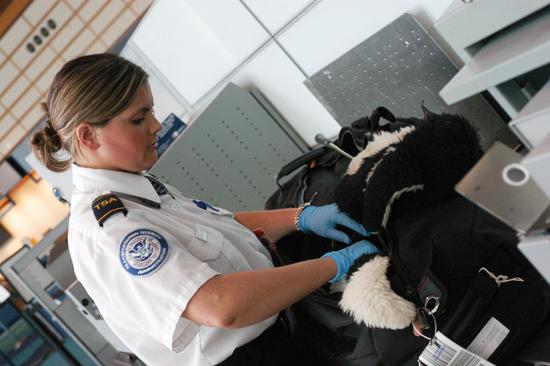
So they don't have cameras watching the TSA employees as they check the luggage? It's no wonder abuses like this keep happening.

Don't check valuables! You have to assume that anything worth more than 5 bucks that you check is going to be stolen. It's not pretty, but it's the world we live in.
This is unacceptable. When there's a string of employee thefts and in particular done by security personnel, there's no justification for ignoring the problem.
Tags:
Big Brother,
Theft,
TSA
Friday, March 8th, 2019 (
No comments yet)
A company who's trying to seel their solution to the TSA is out to prove that the no-fly list is bogus. By going to their site, you can enter a name and see if you have a good chance of being on the no-fly list yourself. Hopefully, enough people will try this and see what a stupid idea it was for the TSA to have done this based on names alone.
Tags:
Security Theater,
TSA
Wednesday, March 6th, 2019 (
No comments yet)
Privacy.org points to an article explaining that the backscatter x-ray will be fielded in Phoenix. This X-ray device can penetrate clothes, but not skin making a pornographic video of them. Yes this allows the TSA to see if you're carrying bombs or guns, but it also removes your clothing.
Update 5/22/2008
It turns out that the technology can be used as described, but the TSA has made taken very good steps towards handling much of the concern. Details in my post
here.
Tags:
Backscatter Xray,
Security Theater,
TSA,
Your Rights
Monday, March 4th, 2019 (
No comments yet)
In a Washington Post article, they address the problem of false positives, where an innocent person is "wrongly detained" because their information is similar to someone's on the no fly list.
A specific example in the article is of Keiran O'Dwyer, a veteran American Airlines pilot who has been stopped and questioned over 80 times since 2003. They say that besides him, there are around 15,000 people, per week, that apply for redress for being mistakenly targetted due to TSA's screening systems.
An agency official said in an interview that the system, launched in February 2006, has eliminated about 17,500 detentions involving people entering the country at airports, seaports and at land borders. It is part of what the government says is an effort to prevent terrorism while not inconveniencing travelers or violating their privacy and civil liberties, though it is not yet applied to domestic flights.
Tags:
Big Brother,
No-Fly List,
Security Theater,
TSA
Sunday, March 3rd, 2019 (
No comments yet)
Bruce Schnier found an intereting article in the NY Times about a bored computer science student wrote a webpage that printed nearly identical boarding passes to those used by Northwest Airlines. Using the fake passes, people were successfully able to bypass airport security. The important part of this article, is the fact that the student did no hacking, no cracking, no breaking of any system. All he did was make passes that looked real.
No cryptographic recipe was cracked; no airline computer system was compromised. Without visiting an airport, Mr. Soghoian needed access to nothing other than a public Web site to embarrass those responsible for airport security.
As security professionals have been saying for years, these measures make life difficult for law-abiding citizens, but do little to stop the bad guys.
Tags:
ID Check,
Security Theater,
TSA