Tuesday, March 5th, 2019 (
No comments yet)

As law professor Michael Geist explains in a recent editorial, "In the name of shielding consumers from computer viruses and protecting copyright owners from potential infringement, Vista seemingly wrestles control of the 'user experience' from the user."
This is what I've been hearing again and again. Microsoft wants to control your use of their software. If an e-mail service refused e-mails from certain sources, would you use it? If they wouldn't let you check your e-mail from certain places, would you use it? If you had to pay an additional fee for each computer you used for mail, would you use it?
Tags:
DRM,
Windows,
Windows Vista
Tuesday, March 5th, 2019 (
No comments yet)
According to the newsletter from TrueVoteMD, a consumer rights group in maryland that opposes the auditless e-voting, there are two bills in the state senate that will require paper trails and adequate records of votes for Maryland.
Tags:
Evoting,
Maryland
Tuesday, March 5th, 2019 (
No comments yet)
Not a bad start at all. Granted, I think we should be able to block data brokers from having our information, but we have to begin somewhere.
(article found at Slashdot.)
Tags:
Congress,
Data Breaches,
Data Brokering,
Privacy
Tuesday, March 5th, 2019 (
No comments yet)
I found this news on Slashdot today. Basically, a university professor used a powerful free tool that lets him browse the Internet completely anonymously (Tor). Because the utility bypasses university security, they came to him and demanded he stop using it.
From his own description of the event, I found this especially nice, condensed description of why someone would want to use Tor:
Tor can also be useful in e-commerce. For example, Amazon.com knows more about my shopping habits and tastes than my wife does. I appreciate Amazon's ability to make recommendations based on my previous purchases. But in 2000, Amazon admitted experimenting with so-called dynamic pricing, charging different people different prices for the same MP3 player; the prices were presumably based on estimates of what each user would be willing to pay, considering prior purchases. Online merchants could all do that, thanks to traffic analysis. They know who I am when I log on — unless I delete their cookies or use Tor.
Tags:
Amazon,
Data Brokering,
Professor,
University
Tuesday, March 5th, 2019 (
No comments yet)
So today my wife received a letter from our bank saying that her card was included in the data breach. They were very pleasant and helpful (as credit unions tend to be), but one thing caught my attention:
If at any time you suspect you may be a victim of fraud or identity theft, you may place a fraud alert on your credit file with one of the three major credit-reporting [companies]. A fraud alert will require any company or creditor to contact you to authorize any new accounts or loans.
For the record, fraud alerts are required, but can be ignored. The problem is that it's the issuing company's responsibility to check for the fraud alert and act accordingly. Since it hurts their business to do so, it's far more likely that they will "miss" the flag (especially when they're on commission). That means that it may help and it may not.
Tags:
Data Breaches,
Fraud Alerts,
ID Theft,
Security Theater,
TJ Maxx
Tuesday, March 5th, 2019 (
No comments yet)
A depressing post on Slashdot recently indicated that forced DNA collection will become standard in criminal investigations.
The goal is to make DNA collection as routine a part of detainment as fingerprinting and photography.
Peter Neufeld, a lawyer who is a co-director of the Innocence Project, which has exonerated dozens of prison inmates using DNA evidence, said the government was overreaching by seeking to apply DNA sampling as universally as fingerprinting.
"Whereas fingerprints merely identify the person who left them, " Mr. Neufeld said, "DNA profiles have the potential to reveal our physical diseases and mental disorders. It becomes intrusive when the government begins to mine our most intimate matters."
Tags:
Big Brother,
DNA
Friday, March 8th, 2019 (
No comments yet)
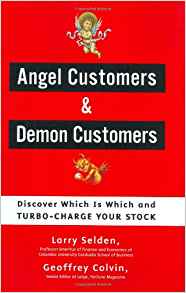
With the proliferation of data about customers on an individual level due to technology such as cookies, web bugs, and RFID (ie Spychips), companies have discovered a more valuable way to manage their assets. Customer profiling.
A new customer management policy has grown popularity in the business world which assigns customers the ominous labels of Angel and Demon.
Angels
This pleasant sounding label belongs to a customer who doesn't comparison shop, buys high-margin items, always picks up "extras" (such as extended warranties and accessories), uses store credit, etc. Basically, anyone who brings the store profit.
Demons
Imagine a point system, where every purchase made was given positive or negative points based on profitability. Now imagine that any interaction you have with a company could be tallied into your profile based on how much time and resources they need to spend on you. Here are some things that might count against you:
- Submitting a rebate
- Using your extended service plan
- Making any purchase without a certain percentage of high margin accessories
- Refusal to buy add-on services (such as a free Internet trial or movies-by-mail)
- Spending an over-average amount of time making the purchase decision
- Refusing to be upsold into a higher-end model
- Complaining about the store to management, to consumer watchdogs, or government agencies
After compiling the results of your score, you may be offered terms of credit, pricing, or specials based on that score. For example, "Special price for our 'Platinum' grade customers only!" (where platinum is another word for "angels"). Another example might be putting better customers in a priority queue for customer service by phone. Though only Best Buy (that I know of) has looked at the angel/demon methodology, there's nothing to stop companies from using the profiles on you they already have to do the same.
Tags:
Angels and Demons,
Best Buy,
Big Brother,
Retailers
Tuesday, March 5th, 2019 (
No comments yet)
This should encourage people to post more videos. Of course, it will encourage people to download a video and repost it as their own (as happens already).
But it's the thought that counts. Of course, it would be better if they share the revenue from the page ads shown around the video instead of adding a stupid ad to the front of any video you try to play.
Tags:
Advertising,
Profit Sharing,
Youtube
Tuesday, March 5th, 2019 (
No comments yet)
If you thought it was hype and paranoia, you were wrong. Not only CAN they create a sensor network to track people with RFID, but they're doing it right now. Denmark's Lego Land puts bracelets on kids that lets them be monitored by the park's many sensors.
Says Katherine Albrecht of spychips.com:
On the safety side, we can't help wondering why parents would let children wander off by themselves armed only with only a tracking device, rather than watching them with their own eyes. If a child is so young or irresponsible that his parents want to fit him with an electronic nanny, what he probably really needs is for those parents to hold his hand and pay attention to him instead. Alienating, authoritarian technologies only contribute to an alienated, cowering populace, whether the setting is an amusement park, a school, a
hospital, a birthing center, or a home.
Tags:
Big Brother,
Denmark,
Kids,
RFID
Tuesday, March 5th, 2019 (
No comments yet)
Of the proponents of RFID, one of their strongest defenses was, "but RFID can only be read from a few inches away, so it can't every be a problem…."
CASPAIN's newsletter points to this article showing that one company is using RFID to let drivers change the messages on billboards over 500 feet away! For perspective, an American football field is 300 feet long.
Tags:
Big Brother,
RFID