


A “Second Life” of Crime

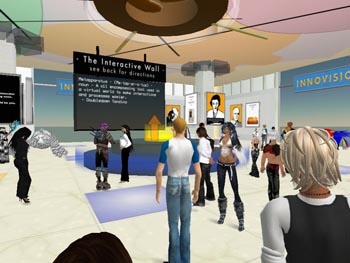
Second Life is a virtual world and community where the only goals are to relax, explore, and possibly build and create (if you choose to do so). Like real life, you can work to create income and spend that income altering your appearance, buying land, or various material possessions or services.
Also like real life, there are people in the game who's only goal is please themselves at the expense of others. Sometimes that's as simple as harassment:
- Verbally abusing another player
- Pushing other players around
- Executing scripts that serve no purpose other than to annoy
- Pushing or "orbiting" someone
But some activities go beyond annoyance into the realm of the legally questionable:
Virtual stalking
This starts out as simply following another player around. While annoying, the catch-all cures are to file an Abuse Report, Teleport away, and/or Log out (for simplicity, further referred to as ARTL). It becomes serious when the stalker/harasser (further known as griefer in keeping with gaming standards) knows your real name or address.
As with all virtual communities the more information you provide live or in your profile gives others the ability to piece together the puzzle and learn more than you intended. But even if you're very careful with your information at all times (as I always suggest), what happens when Linden itself loses all their customer data? The potentials for abuse can go from simply freaking you out to blackmail.
Virtual Blackmail
Second life gives you the opportunity to privately engage in a variety of normally shunned behaviors such as prostitution, beastiality, peadophila, random sex, playing transgender, and gambling (all explained later). But because it's a made-up world and no one is really harmed in any activity and, most importantly, no one knows who you are, players may push the limits of what would normally be deemed morally dubious by their peers. What happens when someone threatens to connect your in-game exploits to your real life identity? Depending on what you've been doing in the game and what would happen if your boss/peers/spouse found out, this could be a very legitimate threat.
Virtual Mugging and Robbery

Second Life is a world where you can build almost anything and sell it for Linden Dollars which can then be exchanged for real money. Besides providing the tools necessary for their users to become the driving force for creating the Second Life world, they allow users to retain all property rights to their creations. Because of this, thousands of products and services have been created and many more are created every day. There are people who have used this system to make hundreds of thousands of real dollars using only game resources.

It's no wonder that people are so protective of their "game money". Not only is it the only way most times to get new clothes and new items for your avatar, but it has real world value as well. Thats why when someone "cages" you and demands money, it's a problem. Of course, with caging ARTL is a simple answer, but not when the griefer has access to system exploits.
In at least one case, a programmer was able to use a Quicktime player security flaw to rob any avatars that passed by and make them shout "I got hacked!". Because Second Life is trying to integrate existing video and web services, those services' vulnerabilities come with them.
Another problem came when a former debugging tool that could copy anything in the game was widely recleased. People's creations are either their form of income for the game, their income for real life, or both so it's not surprising that there was quite an uproar when Copybot first appeared. With unscrupulous players being able to perfectly copy anyone else's hard earned creations, several SL vendors closed shop for good.
Second Life Sexuality
Besides casual sex, you can engage in BDSM, pedophilia (recently banned), beasiality, or just run-of-the mill prostitution. Some people do this freely for fun while others charge a fee for such activities.
The questions about online sex are compelling: Is a virtual immorality really immoral? What would a virtual world of open and free morality affect real world norms? Is there anything wrong with engaging in simulated dubious activities where no one really gets hurt? Would providing an outlet for these behaviors sate desires or inflame them?
The whole situation parallels to the long-argued debate about video violence versus real-life violence, but I don't think either has an answer.
Virtual Molestation and Rape
By virtual molestation and rape, I'm referring to the unwanted sexual contact. The difference is that molestation scripts are simply their avatar performing sexual actions near you or appearing to on you without any participation of your avatar at all. Usually just moving away will work, but what if the griefer has a script or hack that prevents that? Or in some cases its just as easy to trick someone into accepting a sex script by telling them it's something else in which case your avatar will perform according to the script. The end result is that your avatar is now in an unwanted sexual encounter and you might be too stunned to know what to do.
Not too long ago, there was a story of a woman who reported that she had been "raped" in Second Life that gained a lot of attention. If she had known to just use ARTL, she could have easily escaped the encounter, but it appears that she didn't (the details were never release to my knowledge). Many Second Lifer's trivialize the story because it's so simple to ARTL and mock that she's just a money grubber and the virtual is not real.
While there is a vast chasm between what happens to you in real life and what happens to your avatar in a game, the very point of an avatar is that it represents you in Second Life. When something disgusting, unpleasant, or lewd happens to your avatar and whether due to being too new to know what to do, system errors, or hacking, if you are unable to stop what is happening, the feeling of powerlessness while being attacked is just as real as in the real world.
In some casual research, I was told of at least two other stories by Second Life players where the experience of being under someone else's control left them shaken with trembling hands. In both cases though, they were able to teleport or log off after getting over the initial shock and eventually resumed playing.
Their advice was to first make sure you know your options for dealing with any type of harassment (teleporting, logging off, and/or filing an abuse report) and remember that there is nothing that happens in a game that can hurt you in real life.
Virtual Vigilantes
This has led to the rise of vigilante groups (some of whom have crafted entire battleships to deal with the problem). Where Linden might take 20 minutes or more to deal with a problem in progress, the vigilante groups might appear in mere minutes. This is not without controversy as to deal with hackers or rule violators, one must often also employ hacking techniques or break the rules oneself.
Virtual and Not-so-virtual Terrorism
Some members of SL don't like the way the world is changing and solve it through "military force". Though, they they claim the "SLLA will not seek to harm the normal operation of the world", they in fact use methods such as bombings and hiring hitmen to gain noteriety.
The founder of the SLLA and it's members believe that avatars, as members of the world, should have voting rights so they can participate in the decisions that affect them. Whether you subscribe to this mentality or not, at least they have a point to be made.
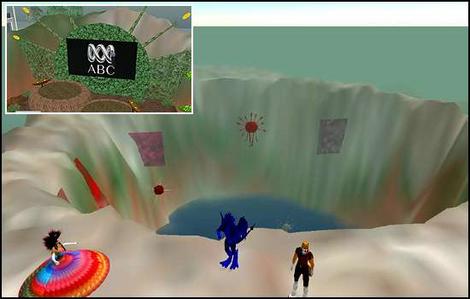
Some people just get enjoyment by harassing and destroying as was the case when ABC company's personal island was vandalized leaving only a crater where their buildings used to be. John Edwards found his second life headquarters covered in unwanted objects. And lastly, some hackers are proud to show off how they were able to harass a volunteer game moderator in this Youtube video.
When it comes to real life terrorism, there has been worries of terrorist using virtual worlds to simulate attacks or communicate in ways that law enforcement may be unprepared to deal with. While the TV version of CSI New York might have team members who are readily able to solve crimes even when they involve Second Life, it's a question whether real police could.
Virtual Gambling
Gambling is heavily regulated and with good reason. Humans have a somewhat addictive personality built in due to the simple fact that we are most heavily reinforced in our behaviors by random reinforcement. As with all things addictive, used properly by people who have the mentality and control to not lose themselves, it is no big deal. For others, it's is the reason their lives have fallen apart and has led to their tragic death.
Though Linden has banned gambling in most forms and considers it a violation of the terms of service, there are no consequences beyond having an account suspended (and that's only if the person running the casino or gambling service gets caught). There appears to be no consequence for the patrons of gambling establishments other than the pain of losing money to someone who has the full ability to guarantee you lose by customizing the scripts on his gambling machines.
Not-so-virtual Money Laundering
Of particular concern both to those studying terrorist financing and to forensic accountants is the ability of an individual or group to move money almost invisibly through Second Life's economy. If I were to want to fund my group of sleeper agents who are ready to TP the neighbor's house at moments notice, I might get onto second life and purchase several thousand Linden dollars worth of objects from them. They in turn would convert the Linden dollars to real money via Linden's Second Life Exchange.
While there are fees for these transactions as there would be in any other medium, the attraction is that Second Life is a largely unmonitored medium (as far as I know). Also, the ability to track the money from one user to another is frustrated by the anonymity of users and the fact that any records that are kept are done so by Linden standards. Even if a warrant were obtained for records, would all the necessary details for crime investigation be available?
| With a virtual word comes Virtual Crime. Learn how Second Life has demonstrated how real life crime can spread to virtual ones. |
| If you want to mess with Second Life, first take the time to learn a few things first. |
| The Second Life Ultra-Primer is a detailed guide written by an experienced SL player. Be sure to check it out! |
Share This

|

|

|

|

|

|

|
||
