Saturday, March 2nd, 2019 (
No comments yet)
The Washington Post reports that the FTC has begun to crack down on false word-of-mouth advertising. This is where a company pays people to tell friends about their products. From the article:

As the practice has taken hold over the past several years, however, some advocacy groups have questioned whether marketers are using such tactics to dupe consumers into believing they are getting unbiased information.
Ya' think?
Tags:
Advertising,
Marketing,
Scams - Ripoffs - Dirty Tricks
Saturday, March 2nd, 2019 (
No comments yet)
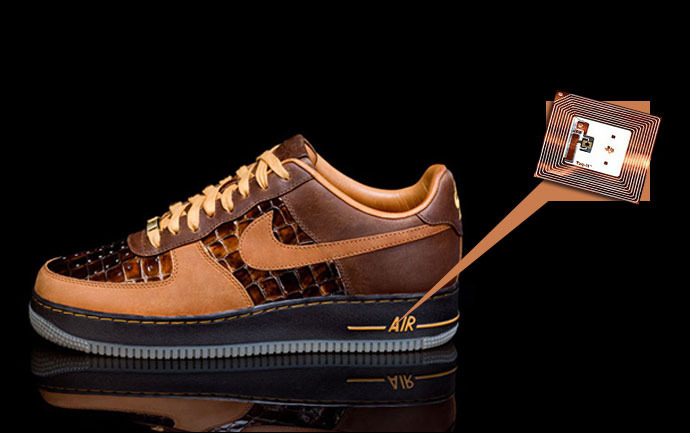
In Schneier's blog today, he writes about a University of Washington study explaining how to track people using their Nike+iPod Sport Kit (which uses RFID).
This is a great demonstration for anyone who is skeptical that RFID chips can be used to track people. It's a good example because the chips have no personal identifying information, yet can still be used to track people. As long as the chips have unique IDs, those IDs can be used for surveillance.
Schneier goes on to say:
To me, the real significance of this work is how easy it was. The people who designed the Nike/iPod system put zero thought into security and privacy issues. Unless we enact some sort of broad law requiring companies to add security into these sorts of systems, companies will continue to produce devices that erode our privacy through new technologies. Not on purpose, not because they're evil -- just because it's easier to ignore the externality than to worry about it.
Couldn't have said it better myself.
Tags:
Big Brother,
Bruce Schneier,
Nike,
RFID
Saturday, March 2nd, 2019 (
No comments yet)
Consumer Affairs reports:
Hackers have gained access to databases at the University of California-Los Angeles (UCLA), making off with the personal information of 800,000 current and former students, employees, and faculty.
The data breach is thought to be the largest of its kind at an American college or university.
I've always said it's less about the security of the system than it is the value of the data stolen. If it weren't so easy to use and abuse people's personal data, then ID Theft wouldn't be such a problem.
Tags:
Data Brokering,
Identity Theft,
Schools
Saturday, March 2nd, 2019 (
No comments yet)
Gamasutra reports that Nintendo is looking into possible solutions for the accidental destruction of TVs or nearby items/people when players in America get a little too excited when playing and accidentally throw the remote.
The article quotes Ninetendo execs as having considered ways to prevent people from getting so excited or by making a special glove people could wear. Apparently they haven't thought that strengthening the wrist strap and putting a small amount of rubber gripping on the edges of the remote where it's held would likely fix the problem just fine. For an extra measure, put rubber edge protectors on the four corners of the front of the remote so if it did fly, it would be less likely to damage anything.
Tags:
Gaming,
Japan,
Nintendo,
Oops,
Wiihavaproblem
Saturday, March 2nd, 2019 (
No comments yet)
The National Institute of Standards and Technology (NIST) is recommending that the 2007 version of the Voluntary Voting Systems Guidelines (VVSG) decertify direct record electronic (DRE) machines.
In the article, they explain how NIST has found that the machines have no paper trail, and that a single programmer could rig an entire election. Uh…hello? This is not news, this was well know for a long time before now. Hopefully now that NIST has said it, someone in congress will pay attention.
Also, for brilliant social commentary on the issue, please see this: Diebold Accidentally Releases Results of 2008 Election Early.
Tags: Diebold, Evoting
Saturday, March 2nd, 2019 (
No comments yet)
From the CASPAIN newsletter:
A member of the Senate Banking Committee denounced RFID "no-swipe" credit cards at a press conference Sunday. Senator Charles Schumer (D-NY) said contracts for the cards should have warning boxes disclosing "the known weaknesses of the technology." He cautioned cardholders about their vulnerability to identity thieves, commenting you "may as well put your credit card information on a big sign on your back."
RFID is an extremely dangerous technology if left unregulated and businesses are rushing to get it to the market before people know what's happening. That's why situations like this happen:
CASPIAN demanded a recall of RFID credit cards last month after the New
York Times reported that a team of security researchers found that
virtually every one of the "no-swipe" credit cards it tested was
vulnerable to unauthorized charges and put consumers at risk for
identity theft.
Tags:
Congress,
Credit Cards,
Oops,
RFID
Saturday, March 2nd, 2019 (
No comments yet)
I had to laugh when I read this today at Penny-Arcade:
All of this confusion for paying customers, so that pirates will be detained an additional fifteen minutes before they descend, their scythes awhirl.
For those who don't know, Penny-Arcade is a site that has been doing comics centered on the gaming industry for years. This commentary refers to the various tricks and traps companies use to try to prevent people from pirating games that don't work and may never work. Ordinary players are bothered and inconvenienced essentially for no reason.
Tags:
Defective by Design,
DRM,
Gaming,
penny arcade
Saturday, March 2nd, 2019 (
No comments yet)
In a recent newsletter, the Electronic Frontier Foundation writes:
Despite complaints from privacy advocates and parents, schools in states across the country are considering using fingerprint scans to track students. Kids at Sandlapper Elementary in Columbia, South Carolina, have their fingerprints scanned to pay for their breakfast and check out library books, while officials at the Hope Elementary School District in Santa Barbara, California, have just announced similar plans to use finger scans to charge students for their lunches.
People need anonymity. It is up to the individual to decide whether to disclose that they were at a particular place, associate with particular people, or are involved in particular events. That's what it means to be innocent until proven guilty.
This is really simple folks: Criminals lose their rights, law abiding citizens don't. For the necessity of investigation, people who can be reasonably suspected of being involved in wrong-doing can be looked at more closely (with a warrant), but other than that, no government body should be tracking, monitoring, or data mining information about anyone. Raising kids as sub-citizens who won't expect the same rights and privileges we enjoy today is NOT ok.
Tags:
4th Amendment,
Big Brother,
Fingerprinting,
Parenting,
Schools