Beware the Inevitable Haiti Earthquake Relief Scams

Beware of spewing garbage

As always happens with current events and especially with relief and aid efforts, scammers come out of their holes to steal money meant for the unfortunate. E-mails and social networking messages will start pouring in and fake relief websites have popped up already. Avoid scams that only make scammers richer and donate only directly to major organizations (such as the Red Cross) or at least do your research first.

The Better Business Bureau has a listing of charities that are in good standing at http://www.bbb.org/us/charity/

For more information about the scams, see the Ars Technica article on the subject.

Tags: , , , , ,

The Truth About Bottled Water

(Image is in the Public Domain)

This chart is a little eye-opening. I already knew that a lot of bottled water is actually filtered tap water, but I didn't know (nor am I surprised) that the regulation on bottled water is insufficient. If you want to buy a bottle of water, go ahead, but know what you're getting for the money.

Presented by Online Education

The Facts About Bottled Water
Tags: , , , ,

Amazon and Christmas Pain

(Image is used under the Pixabay license)

I have a bit of a love/hate relationship with Amazon.com, but this season, it's more hate. I found the gift I'd been looking for on Amazon for about $10 cheaper than my normal favorite, Newegg.com.

However, I suppose nothing cheap comes without strings attached, not at Amazon anyway. Check out this BS:

Are you kidding me? (click for the full picture)

So not only are they saying that with more than 20 days lead time, they can't get me this item by Christmas and it's not free shipping as was promised, but there's hope! If I sign up for "AMAZON PRIME" I get not only free shipping, but it comes on time. It's only 80 FREAKING DOLLARS should I somehow forget to cancel.

Ok, so I could just sign up and cancel right away, but I shouldn't have to jump through goofy hoops just to buy something and this smacks entirely of deliberate obstacles for the sake of pushing me into their "premium service". I don't do deceptive.

For $10 more, I just kept my business at Newegg.com which has been the most consistently excellent source of electronics research and prices all while maintaining excellent customer service. Be sure to take your business there too.

Update: It's the 11th and my gift already arrived. I wonder why Newegg's free standard ground shipping managed to get me my item in less than 5 days, but somehow Amazon just couldn't do it in less than 20 unless I signed up for Amazon Prime… Hmmm…. It's a mystery.

Tags: , , , , , ,

Every Bank Abuses You With Credit

One hundred percent of credit cards offered online by the leading bank card issuers continue to include practices that will be outlawed once legislation passed in May takes effect next year.

What this hardly surprising bit of news is saying is that every single bank, because they've been allowed to thus far, uses abusive and deceptive credit practices. It just boggles my mind when people say the market can "regulate itself". I wonder why several hundred years of abuses isn't enough evidence of just how wrong that is.

Tags: , , , , ,

Gift Cards

Pros

They are a convenient way to buy something for someone while allowing them the freedom to choose the specific items. As a gift-giver, your greatest goal is to find someone the perfect item that you're sure they'll like, but this is hard to do unless you know the person very well.

However, giving plain cash is often considered very bland as it takes no thought to give someone money. Also, when given money, a responsible person may feel obligated to spend it on other things such as rent, food, bills, etc. rather than something for themselves (which is the point of gifts).

Enter the gift card. If you know a store that has items that your recipient would like, but not the specific item(s), buying them a credit gives them the flexibility to choose what they wish, but not to spend it on something you didn't intend. For many gift givers, this is a great solution.

Cons

As with rebates and warranties, gift cards are money you give stores something for nothing immediate in return. A store gains revenue for as long as it takes the recipient to use the card which may be only days, but could be as long as months or years.

A lot of people lose or forget about gift cards. Some gift.

In most cases, the recipient will buy something worth more than the card's value since no one likes to lose money. But in other cases, people will use most of the value and eventually forget about the few cents to few dollars left on the card (bonus for the retailers!). Add to all that the fact that many people lose cards and you can begin to see why gift cards are so common now.

Beware!

All of the above are reasons why it's good for stores to offer gift cards and that's only assuming that they're playing fair. Make sure it doesn't have any of these "gotchas" before you buy it (and don't rely on the salesperson's opinion, read the terms).

  • Expiration dates: It's easy to misplace a gift card for a while or lose track of time and not make it to the target store for many months. If the card expires before the recipient can use it, the company keeps the money and no one gets anything out of it.
  • Restrictions: You'll need to check the legal terms to see if the card can truly be used for anything in the store or not. Perhaps it's only good on purchase of home theater items (which could make it useless to a recipient who wasn't planning to buy any of those kinds of items).
  • Refundable: Most gift cards are non-refundable, but what if your recipient is in the military and moves far away from any of that store's outlets? And what of the case where they spend all but a few dollars. Will the store give a cash refund for trivially small remaining balances?
  • Usable online: If the store has an online presence, can the card be used the same way there?
  • Fees and declining balances: This is complete bull. There is no reason to ever charge a fee for giving a store money. If there are any fees on purchase or use of a card, don't buy it, no matter how small the fee.

    A lost card will almost always require a fee to reissue (which is okay considering it's your fault for losing it, but that assumes they'll even reissue a lost card).

In Conclusion

If you're going to buy a gift card, understand the risks. If your goal is to give a gift to someone, but it ends up being something they can't or don't use, it's no gift at all.
Tags:

Product Rebates

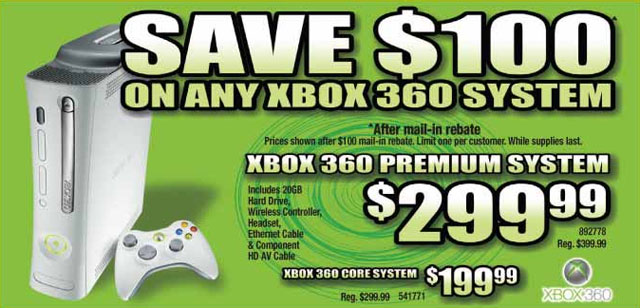
In TINY letters it says price is AFTER rebate. Doh!

Rebates are those deals where they promise you a super-low price, sometimes FREE!… buuuut you have to jump through a few hoops first.

Why Stores Like Rebates

You may have wondered why rebates instead of just a discount? Either should be a tax write-off for the company offering them, but there are specific advantages for companies in offering rebates:

Even if you manage to get your rebate, the company that issued it gets to have your money and keep it interest free for 4 to 6 weeks or longer. Better yet (for them), they get chance after chance after chance to keep your money forever:

  • If you buy the wrong item, buy it during the wrong dates, send the wrong paperwork, fail to cut off the UPC code from the product packaging before you throw the packaging away, forget to mail it, or just mail it after the cutoff date, you lose.

  • If it gets "lost in the mail" or carelessly handled by the rebate company, you lose.

  • If the rebate check gets lost in the mail back to you or you forget or lose the check before you can cash it, you lose.

Best of all, the companies require a decent amount of personal information and seldom provide a privacy policy or indication of which data is optional. If they provide a form asking for information that you don't feel is relevant, you could skip it, but then run the risk of having the rebate refused. Once they have your information, without any law to the contrary, they can store it, profile you or sell it to other profilers at their convenience. It's basically the same as a forced registration.

Rebates should instant in-store discounts only. All other types should be illegal.

So let's sum up, they get your valuable personal information and in many cases get to keep your money too. So they win big and you lose big which doesn't sound like a very good deal to me.

As far as I'm concerned, unless it's an instant in-store discount, all rebates should be illegal.

Rebate Tips

Until and unless that ever happens, here's what you should know about rebates to increase your chances of getting the money the promised you:

  • Read the rebate form's legal details and make sure that it doesn't have any nasty loopholes or policies that you didn't expect.
  • Check the model number of your product and verify that it's specifically listed on the rebate form.
  • Check the effective dates of the rebate to make sure you're buying the item during the rebate period. If it's expired, but a salesperson says the rebate has been extended, have them show you the new rebate form as proof.
  • After buying the product(s), immediately fill out all forms, cut off the UPC codes, and put each rebate in an addressed, stamped envelope ready to go out the next day.
  • Make sure that if you have multiple rebates, you send the original copies to the ones that ask for the originals. The others should say "copy of". If two ask for the original of something, call the number that should be listed on the rebates to get clarification.
  • Make sure that you keep copies of everything. Scanning them into the computer is a great way to do this. It's also a good way to make the copies you need.
  • Make sure that you wrote the correct addresses from the rebate forms to the envelopes.
  • Keep a log of each rebate, the date that you expect the money back, and the phone number (or other contact information) listed on the form to call if it doesn't come back in time. Write each on your calendar and call them immediately if they're not back in time. Keep records of every person you talk to and what they say (record it if you legally can).
  • For large rebates, send them certified mail so they can't claim they didn't receive the information.

In Conclusion

If that seems like a lot of work to get your money, it is. The point that you must remember is this: if you aren't the kind of person to carefully work through all your rebates and follow up if there's a problem, you're probably better off not bothering with rebates at all. Just stick to the lowest price in the store and be done with it.

Tags: ,

Nigerian Scam

At it's simplest, a Nigerian scam is a con where someone sends you an e-mail pretending to represent the account of a rich relative you didn't know you had who left you a fortune, the king of some country who for some reason wants YOUR help hiding all his gold, or a hundred other variations where people prey upon your greed to rob you.

As an example, here's what a scam looks like in the wild:

Ooh! I won a lottery that I didn't even enter! It's too good to be true.

When you open the e-mail, the letter is worded like many award letters would be. It's in English and it's formatted nicely and no one would actually lie to me so it MUST be real, right?

Oh boy! I'm rich. This suspicious e-mail says so!

Don't Become a News Story

click the image to read her sad tale
There's a lady in Oregon who lost over $400,000 to a Nigerian scam before she finally realized that she wasn't going to get any of the money that the con artist kept promising her. The simple rule here is to remember that you didn't win any money, you don't have long lost rich relatives who are going to leave their estate to you. Even if they did, you should become very suspicious the first time anyone asked YOU for any money particularly when you have to send it out of country to someone you've never seen, never met, and probably never even talked to on the phone.


Tags:

Phishing

Phishing is an extension of an old scam where someone would call you pretending to be from your bank or the hospital and try to scare you into giving them information.

"Mrs. So-and-so, I'm Bill from the bank. Your account has been emptied and we're concerned that it wasn't actually you who did it. We can replace the funds, but we'll need to verify your identity. Please tell me your name, address, phone number, social security number, mother's maiden name, blood type, the time and duration of your last period (etc. etc.).

Here are some of the various types of phishing and what to do about them:

Account Phishing

Say a bad guy gets an e-mail from his bank warning of scams going around and to be careful not to fall for them. By copying the letter and just changing the end to list a link "for more information", he can easily have a very authentic looking e-mail to mass-distribute and hopefully con people with.

A fake e-mail...
...that leads to a fake website

Regardless of the form of the e-mail, the content tends to be very similar. Something's wrong with your account and you better log in quickly to find out what it is. The problem is that if you follow the link, the site you go to might look exactly like the real site, but it's actually a fake under the control of the bad guy.

Once you enter your name and password, you'll be redirected to the real site and will probably never realize that you just handed someone your login name and password. So when they told you that your account was empty, they were lying, but because you fell for their trick, soon it will be.

A phishing e-mail that's trying to get you to open an attachment. Don't fall for it!

Prevention

The simple solution is to never follow any link from an e-mail that claims to have come from your bank, your social sites, or anywhere else you have an account. Instead, open a browser window and go to that site or service directly (but make sure to use my search engine trick if you don't have it bookmarked). If the information in the e-mail about your "account being suspended" or whatever is true, you'll be able to find out by logging in normally or just calling the company.

The same goes if they want you to download an attachment, call a phone number, or make security changes to your computer. All of these can hurt you and help them if you don't verify the information before acting!

Spear Phishing

It's pretty easy to ignore an e-mail from a bank you don't even bank with. But what if the fake e-mail used your actual bank and addressed you by name? They might even refer to a recent communication you had with a real bank representative. Most people are far more likely to fall for a con that starts with authentic information.

Prevention

There are many ways bad guys can get that kind of data and you should do your best to prevent that, but the simple solution is the same as before:

When asked to call a number, follow a link, download a tool or attachment, or any other similar activity in an e-mail, just validate the message before acting on it!
Tags:

The ISP E-mail Trap

Don't fall for the trap!

It's great isn't it? When you sign up for Internet service and get online the first time, they helpfully provide you an e-mail account to use for free! Of course, almost all online e-mail accounts are free, but your isp makes it easy by giving you software that sets your homepage to their service with quick links into your e-mail. Heck, they practically PUSH you right into it.

The problem comes in when you inevitably find a better deal and want to switch services. It's a pain to change e-mail accounts particularly if you started using it for your business. But most ISPs won't let you keep your account once you cancel service. You either have to give it up or pay a monthly fee to access it. Now… you're trapped.

I have known people who have paid over $15 a month to their prior ISP just so they could keep the account active! So much for saving money with a different provider. In fact, there's a lot of people who, after doing the math, decide it's really not worth switching at all. On an unrelated note, I wonder how these companies decide how much to charge for e-mail service without Internet… hmm…

Avoid the Trap

All thinly veiled accusations aside, it's simple to just avoid the trap in the first place. Never, EVER, use the e-mail provided by your Internet service (unless you think it would make a good decoy account and it doesn't list your real name).

It's simple and it's free to get e-mail service from any number of well-known providers online: Hotmail, Gmail, Yahoo etc. I've used all three and they each have their advantages and disadvantages, but the key is that they all work regardless of any ISP you use.

Tags: , ,

Beware of Hijacked Facebook Accounts

(Image used under: Creative Commons 2.0 [SRC])

Of course this isn't a problem limited only to Facebook, but the FBI issued a warning about the rise of hijacking scams. This is where a bad guy gets your login information through various means and then poses as you on your account. They'll send an urgent request for help or money to all your friends who may be fooled and comply (as in the case of Bryan Rutberg).

Remember to use good passwords and protect them especially the password for your e-mail account (which can be used to unlock all your other accounts).
Tags: , , , , , , ,

Loading...

If you want to learn more about my professional background, click here to learn more.

Check out one of my guides/tutorials:

seminar destroy Tutorial
|INDEX|next: The Consequences of Posting Online
Online Addiction: From gambling to surfing and online gaming, people can destroy themselves and others with online addiction.
Posting Online: The Internet never forgets anything completely. Make sure you don't make mistakes that will stick with you for the rest of your life.
Protecting Photos: The Internet never forgets anything completely. Make sure you don't make mistakes that will stick with you for the rest of your life.
Getting Tricked: You WERE doing fine... until someone convinced you to install a virus or give away your passwords. Don't fall for it!
Account Hijacking: One of the most common security risks today is people getting their accounts taken over and then used to trick their friends and family.
Trusting Webservices: An online service promises they'll 'Never abuse or misuse your data' and you believe them? Think again.

... or check out any of my other guides and tutorials by clicking here!

Using a Decoy E-Mail Account

Why it's very important to use a buffer e-mail account to shield your main account from people and companies that you don't trust.

[Click for full description]

Using E-Mail Aliases Properly

It can be hard to find a good name to use in an e-mail account that hasn't been used and doesn't give away too much information about you.

[Click for full description]

Online Addiction

Concerned about online addiction? You should be. Learn the types, the signs, and the preventions.

[Click for full description]

The Consequences of Posting Online

It's fun to post online. What you think, what you feel. But words typed and posted on the Internet can come back to bite you more than anything you could say with your mouth.

[Click for full description]

Photo Safety

You can reveal far more than you intended when you post a photo online. Don't make a critical mistake and check your photos before they're online.

[Click for full description]

Tricks and Scams

Just because you won't willing give up data doesn't mean that I can't trick you out of it. Don't fall for these well known tricks!

[Click for full description]

Account Hijacking

One of the newest threats we face is the risk of someone getting control of your online account and using it against you and the people you know. Do everything you can to prevent that from happening!

[Click for full description]

Trusting Companies

Store, online or off, are not known for being fair and helpful unless it benefits them to be so. Good deals exist, but many are bad deals in disguise. It's not in your best interests to be too trusting with any of them.

[Click for full description]