•

New Bill Would Allow Feds to Seize Any Computer

Mine now, sucka!
(Image is used under the Pixabay license)

Any computer with at least one file "coming from 'dubious origins,' e.g. downloaded from P2P". I don't know about you, but everyone I know has downloaded something at one point or another. As I've said before, there are many situations where downloading even copyrighted material is completely ethical(even if it may not be clearly legal or illegal).

Info on the bill brought to you via Slashdot.

Tags:

Articles of Impeachment Against Bush

George W. Bush
(Image used under: Fair Use doctrine)

I hate it when they tease. Of course, Dennis Kucinich is introducing not one, but 35 articles of impeachment against Bush. Could justice finally be served? Be still my beating heart!

Tags: , , ,

Ugly Shoes Also Dangerous?

(Image used under: Creative Commons 3.0 [SRC])

Child gets foot stuck in escalator due to the Croc brand shoes she was wearing. Most disturbing is this:

CPSC is aware of 77 entrapment incidents since January 2006, with about half resulting in injury. All but two of the incidents involved popular soft-sided flexible clogs and slides.

What the hell is the Consumer Product and Safety Commission doing if they know about this problem and aren't doing anything about it? Of course, if the current head of the CPSC is as bad as the one Bush nominated last time, this is hardly a shock.

Tags: , , ,

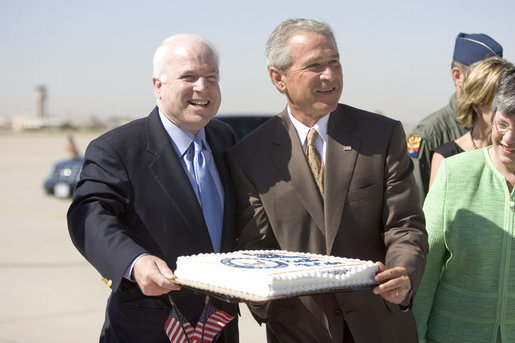
If You’re Sad to See Bush Go, Vote McCain!

(Image is in the Public Domain)

McCain, like Bush would support warrantless wiretaps and telco immunity.

The Article II citation is key, since it refers to President Bush's longstanding arguments that the president has nearly unlimited powers during a time of war. The administration's analysis went so far as to say the Fourth Amendment did not apply inside the United States in the fight against terrorism, in one legal opinion from 2001.
Tags: , ,

EU to Scan Airline Passengers Faces During Flight

(Image is in the Public Domain)

By putting tons of cameras at different angles on an airplane and carefully inspecting everyone's faces and movements, the EU hopes to identify terrorists before they strike.

There's only a few problems to work out:

  1. There's no way to know what a terrorist looks like
  2. Removing privacy with no gain is a vast waste of money and resources
  3. Mass surveillance hurts everyone and doesn't actually work.
Tags: , , ,

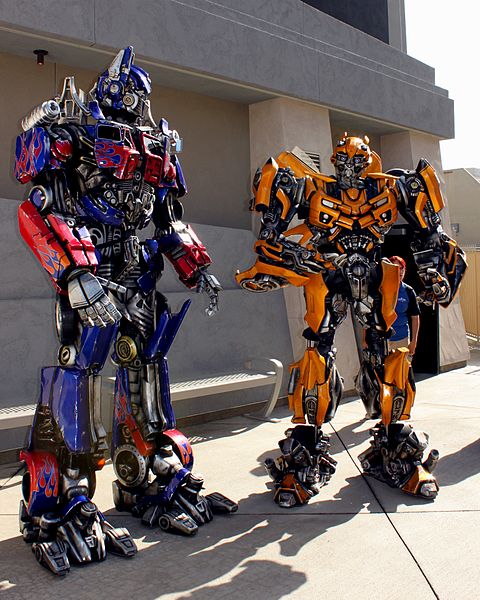
Man Blocked from Flying Due to Transformers T-Shirt

(Image used under: Creative Commons 2.0 [SRC])

It seems that wearing a t-shirt with a gun on it is grounds for a ban from flying. I know there's "always two sides", but this is just plain stupid.

Tags: ,

Extra, Extra! Congress AND Bush Did Something Right

(Image is used under the Pixabay license)

It's amazing and I promise it's no joke, but both congress AND Bush did something right by drafting, passing, and then signing into law the Genetic Information Nondiscrimination Act.

Some provisions of the law include:

- Prohibiting group health insurance plans and issuers offering coverage on the group or individual market from basing eligibility determinations or adjusting premiums or contributions on the basis of an individual's genetic information. Insurance companies cannot request, require or purchase the results of genetic tests, and they are prohibited from disclosing personal genetic information. - Prohibiting issuers of Medigap policies from adjusting pricing or conditioning eligibility on the basis of genetic information. They cannot request, require or purchase the results of genetic tests, or disclose genetic information. - Prohibiting employers from firing, refusing to hire, or otherwise discriminating with respect to compensation, terms, conditions or privileges of employment. Employers may not request, require or purchase genetic information, and they are also prohibited from disclosing personal genetic information. Similar provisions apply to employment agencies and labor organizations.
Tags: , , , , , ,

TSA at the CFP Conference

(Image is in the Public Domain)

I ended up sitting next to Peter Pietra, the head of the privacy department at the TSA. This gave me an interesting opportunity to talk about issues of privacy when dealing with their agency and the first thing I asked was about the pornographic backscatter x-ray devices.

He was clearly frustrated (and I don't blame him) as I'm sure this is a topic that assaults him regularly. The issue is that backscatter CAN see through your clothes, but the TSA orders the devices preconfigured at a level that prevents them from seeing pictures such as these one on the Internet. They are also unable to modify the configuration. In fact what they actually see, as shown on their site, is smeared blob that highlights objects, but not skin.

The issue that I have here is that if the TSA's claims of how they use the technology are true, then what the hell was all the hype about?

Images will be deleted immediately once viewed and will never be stored, transmitted or printed (the passenger imaging units have zero storage capability) Metallic and non-metallic objects are displayed, including all items that a passenger may be carrying on his/her person

Also, according to the website, you can always choose to have a pat-down instead.

I asked Peter about this because it seems to me most people aren't going to know to go to the website and read about Backscatter before being faced with it at an airport, but he said that the sample picture on the web is printed right on the machine and people are supposed to be shown the picture and told of the option for pat down prior to being scanned.

Final Thoughts

I notice that the picture on the TSA site is from behind so probably doesn't fairly show how much frontal detail they would see so for full disclosure, they should show a frontal picture. However, I can understand why someone wouldn't want to show what amounts to nudity on these machines for propriety reasons and don't necessarily consider that evasive.

What more can you ask for than clear disclosure and a reasonable choice? Granted the technology can be used for worse things, but the devices is about as small and conspicuous as a casket so you'll never be scanned without your knowledge. If they are configured correctly, store nothing, and you can opt for a pat down, then perhaps some have been too harsh on both the technology and the agency.

Speaking of, EPIC's article that led me to write about backscatter in the first place unfairly show the capabilities of backscatter ignoring the actual use of the technology by the TSA. I'm sure there's someone from EPIC around the conference somewhere and I'll be sure to ask them about it.

What TSA Sees
What EPIC Shows
Tags: , ,

Deceptive Voting Practices – CFP 2008

(Image used under: Fair Use doctrine)

I'm at the Computers Freedom and Privacy conference of 2008 and I'm currently sitting in an interesting panel about something I had no idea about. I assumed that deceptive voting practices meant e-voting, but what they're actually talking about is modern-day Jim Crow laws.

I suppose I should have known better, but I wasn't aware that there were still problems with disinformation encouraging people not to vote. Often the misinformation will come in e-mail or physical mail and will seem very authentic appearing to have come from some state agency or well-known organization. They will try to discourage you from voting by telling you:

  • that due to massive expected turnout, Republicans would vote on election day and Democrats the day after (thus eliminating Democratic votes from the election).
  • that if you have unpaid parking tickets or child support, you'll be arrested when you go to vote
  • that the polling location has changed
  • that any ex-cons can't vote (note that this may be true depending on the state you're in, but be sure to check before deciding not to vote)
  • that the voting registration deadline has long passed so there's no point in even trying now

There's more, but that's a start. If anyone tells you that you can't vote for some reason or that your polling location/date has changed, verify the information before acting on it!

Tags: ,

National Security Letter Successfully Challenged

Note to Author: One of your jtags is missing a closing quote or a />. Your post is currently broken Tags: ,

Loading...

If you want to learn more about my professional background, click here to learn more.

Check out one of my guides/tutorials:

email Tutorial
|INDEX|next: E-mail Viruses

E-mail Dangers

Until we find out who the people are who actually buy things from spammers and kick them off the Internet, you're going to have to learn how to deal with and prevent spam.
E-mail Viruses - Learn how viruses are spread through e-mail and how to stop them
Phishing - Spot and avoid lures that pull you into the dark side of the web
Don't be one of those people that loses thousands of dollars to the classic Nigerian Scam.

E-mail Etiquette

Use CC only when necessary and BCC the rest of the time.
Use Reply-All when you mean to and never when you don't.
Practice proper E-mail Forwarding to protect privacy and make e-mails more readable.
Always personalize your e-mails to make it obvious to your recipient that it's valid.

E-mail Tips and Tricks

Using E-Mail Aliases Properly - Be careful about using sensitive data (like your real name) in an e-mail account.
Remember to treat your e-mail account with the security it deserves.
Use a decoy e-mail account to keep your main e-mail account free of spam.
Avoid using any Internet provider's default e-mail.

... or check out any of my other guides and tutorials by clicking here!

Preventing Spam

Spam is annoying and worthless, but you still see it every single day. Here are some tips for preventing and reducing spam.

[Click for full description]

E-mail Viruses

Make sure that viruses don't sneak onto your computer through your e-mails. Read some simple tips to prevent that from happening.

[Click for full description]

Phishing

By far the most dangerous thing you'll find in e-mails is a lie. Sending a bogus e-mail to someone is generally called phishing, but can also be referred to as a Nigerian scam (depending on the goal of the e-mail). Learn to recognize and deal with phishing before it's too late.

[Click for full description]

Nigerian Scam

Many people have lost thousands and even hundreds of thousands of dollars to the classic Nigerian Scam. Don't fall for it!

[Click for full description]

How to Use "CC" Properly

Don't violate people's privacy and invite spam into their accounts by CC'ing all your contacts. Learn the proper way to send mass e-mails first.

[Click for full description]

Reply-All

It's easy to embarass yourself or harm your career when you don't know how to use Reply-All appropriately.

[Click for full description]

How to Forward E-mails Properly

Don't forward e-mails carelessly or you risk looking foolish as best and violating the privacy of all your contacts at worst.

[Click for full description]

Personalize E-mail

Follow this simple rule of e-mail etiquette to help prevent your friends and family from falling for phishing scams.

[Click for full description]

Using E-Mail Aliases Properly

It can be hard to find a good name to use in an e-mail account that hasn't been used and doesn't give away too much information about you.

[Click for full description]

Protecting E-mail Passwords

Your e-mail account is the most important online account you have. Remember to treat it as such!.

[Click for full description]

Using a Decoy E-Mail Account

Why it's very important to use a buffer e-mail account to shield your main account from people and companies that you don't trust.

[Click for full description]

The ISP E-mail Trap

Don't fall for the trap of using the free e-mail account provided to you by your Internet service!

[Click for full description]