Thursday, March 7th, 2019 (
No comments yet)
Microsoft has now admitted that their software validation tool will check in with Microsoft servers even if you tell it not to.

But if you cancel the installation of WGA, maybe because you dislike the privacy implications, the software will still phone home. Microsoft stresses that WGA does not take any information which could identify you as an individual, but is only used to collate statistics on WGA use.
Who cares if it can't personally identify you (if that is indeed true)? The point is that you are not in control of your own software. For those non-technical among us who have always wondered by geeks hate Microsoft, it's because of stuff like this.
(Update:) ArsTechnica expands on this saying that this behavior is typical of ANY software distributed through Windows Update.
Tags:
Big Business,
Microsoft,
Microsoft Visa
Thursday, March 7th, 2019 (
No comments yet)
The Register has an article about a bogus Vista activation key generator, but lists this interesting bit near the end:
The latest attack exploits Vista's System Locked Pre-installation 2 (SLP2) mechanism, technology which allows Microsoft's favoured hardware partners to avoid users having to activate their Vista installs. SLP2 combines an OEM specific certificate along with markers in the machine's BIOS and an appropriate product key.
The hack involves creating a BIOS emulator that serves up the correct BIOS data when needed. Used in combination with the appropriate OEM certificate and product key this defeats the activation mechanism. Information on the OEM certificates and other information needed for the hack to work are available. Withdrawing the affected keys in order to defeat the hack would likely upset Microsoft's OEMs.
Tags:
Big Business,
Microsoft,
Windows,
Windows Vista
Thursday, March 7th, 2019 (
No comments yet)
Spychips author Katherine Albrecht has warned of RFID being put into things like paper, clothing, stamps etc. and it looks like the technology is
catching up with the theory.
Also this excerpt from Popular Science explains it in more detail actuallly referencing the use of these RFID chips in money.
For years, radio-frequency identification, or RFID, tags have been used to track everything from highway tolls to pets, but only Hitachi’s newest tag is skinny enough to fit inside a dollar bill. Just 0.15 millimeter square and 7.5 microns thick, it’s a mere 1/15 the size of the next smallest RFID chip. And it can do everything its predecessors can. Hitachi’s tags store up to 128 bits of data—including prices, serial numbers and places of origin—that radio scanners can read from more than 10 feet away.
RFID chips typically use thick metal guard rings to insulate their circuitry. The insulation limits electrical interference but makes the tags too bulky for thin products such as paper. Hitachi’s weight-loss solution is to remove the rings and separate the circuits into individual wells coated with a thin insulating layer of silicon dioxide.
So far, the new insulation trick has worked perfectly. An earlier version of the chip successfully debuted in tickets for the 2005 World Exposition in Aichi, Japan, as a way to stop counterfeiters, and a new, even slimmer version could appear in European and Japanese currency within the next few years. When that happens, banks and businesses can simply scan the tagged bills to confirm their authenticity or trace their origins.—Elizabeth Svoboda
Tags:
Big Brother,
Big Business,
RFID
Thursday, March 7th, 2019 (
No comments yet)
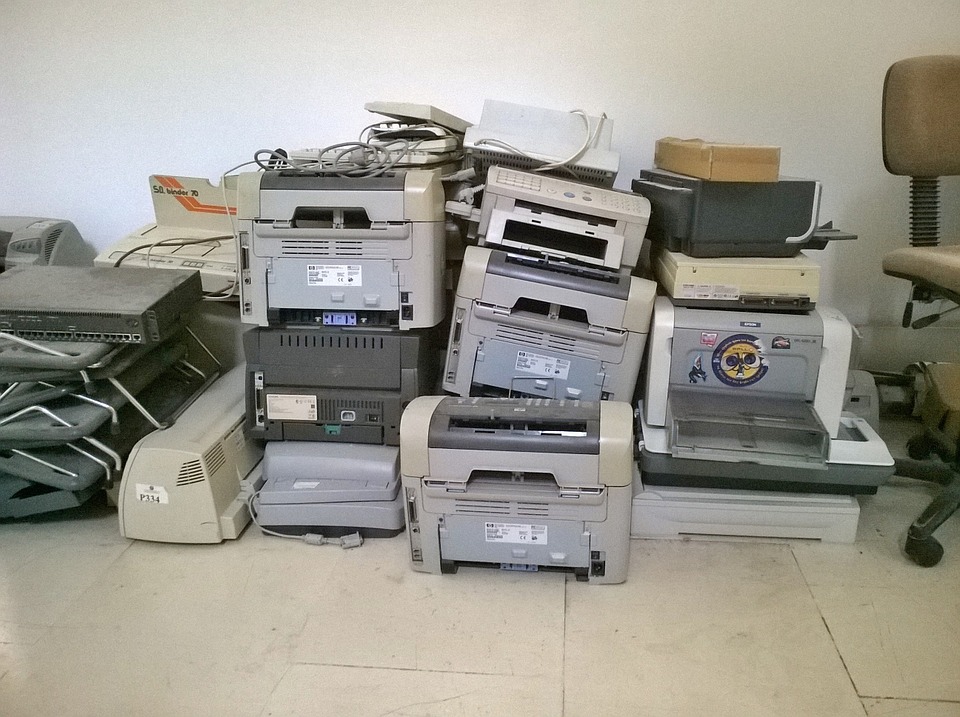
Did you know that many new printers print "tracking dots" that encodes information in everything you print? They are nearly invisible, but can be used by law enforcement or others to specifically identify what printer printed any photo or document.
Since they don't openly disclose this "feature", be sure to stop by the EFF's guide to which printers come with tracking dots and which don't before you choose your next printer.
Tags:
Big Brother,
Big Business,
Tracking Dots
Thursday, March 7th, 2019 (
No comments yet)
The Register has been following the story of a massive archive of "dirty tricks" that Microsoft performed during a lawsuit. Recently, the archive disappeared from the Internet, but now it's back in the form of torrents.
Tags:
Big Business,
Microsoft,
Regulation
Wednesday, March 6th, 2019 (
No comments yet)
This is a damn funny article explaining who is the worst of the worst and why:
America Online
America Online's privacy intrusion efforts are so aggressive and offensive, that the only explanation seems to be that AOL thought its clientele was so naïve they would never catch on to the company's privacy invasions.
and…
Amazon.com
Amazon.com is currently among the world leaders in distributing information about its users to advertisers, and if they continue this practice the recent advancements in data mining by Amazon threaten to make shopping online with any form of anonymity a thing of the past.
and (not surprisingly)…
Microsoft
Perhaps the most insidious method of privacy invasion Microsoft employs is the “Windows Live ID ? (formerly Microsoft .NET Passport). The Windows Live ID collects data from the majority of Microsoft networks including MSN, Hotmail, and Xbox Live, and stores them in a central database.
Most of the others were data-brokering companies like ChoicePoint and Acxiom which have already been in the news for the way they treat consumer information. Some that I didn't expect, but am not surprised about are Yahoo and Google.
Thanks to the
EFF newsletter for the link!
Tags:
Acxiom,
Amazon,
AOL,
Big Business,
ChoicePoint,
Data Brokers,
EFF
Wednesday, March 6th, 2019 (
No comments yet)
Have you been targetted by a "takedown" letter threatening you if you didn't take down your posted video? The EFF is looking for you.
Were you or someone you know unfairly caught in Viacom's dragnet? If your video was hit with a bogus takedown, contact information@eff.org -- we may be able to help you directly or help find another lawyer who can. In this situation, as in so many others, EFF will work to make sure that copyright claims don't squelch free speech.
Tags:
Big Business,
Copyright,
Fair Use
Saturday, March 2nd, 2019 (
No comments yet)
Katherine Albrecht, the world's leading RFID privacy expert and co-author of the book Spychips - How Major Corporations and Government Plan to Track Your Every Move with RFID writes:
Former U.S. Secretary of Health and Human Services Tommy Thompson is considering a run for president in 2008…
As head of Health of Health and Human Services, Thompson oversaw the scandal-ridden FDA when it approved the VeriChip as a medical device. Shortly after leaving his cabinet post, he joined the board of the VeriChip Corporation and wasted no time in using his clout to promote the company's glass encapsulated RFID tags.
These tags are injected into human flesh to uniquely number and identify people. He also suggested implanting military personnel with the chips to replace dog tags.
Thompson has an option on more than 150,000 shares of VeriChip stock. Right now those options aren't worth much. Security flaws and public squeamishness have hurt the company's sales, resulting in losses of millions of dollars.
Even if he remains chip-free as we hope, the American people should still be wary of him.
Tags:
Big Business,
FDA,
POTUS,
RFID,
Verichip