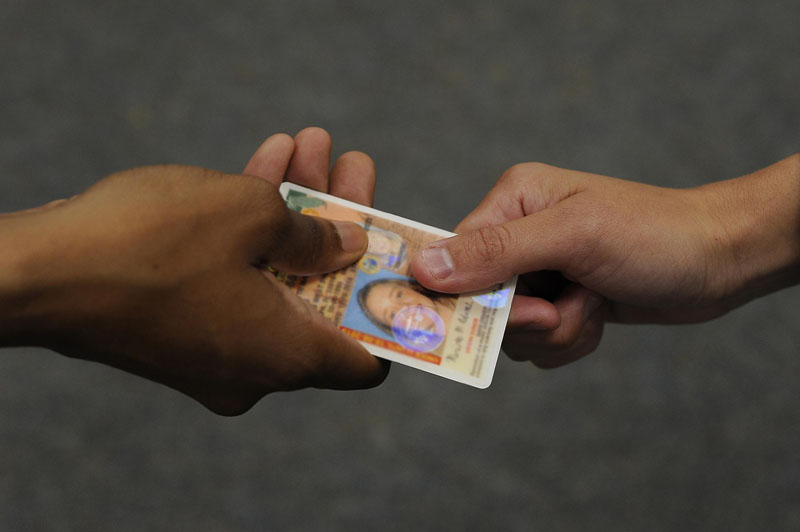
Despite Promises, Lifelock Knows Public Data is A Risk

(Image used under: Fair Use doctrine)

Todd Davis didn't post his social security number publicly because he thought his company could protect it. He did it as an advertising gimmick that netted him almost 2 million paying customers. At least, I have to assume that's what Todd's motivations were because I'm guessing he's not an idiot and knew his service wouldn't actually prevent ID theft. Even if he were, there have been so particularly telling clues recently such as:

  1. Having his own identity robbed 13 times since the stunt began.
  2. The 12 million dollar settlement with the FTC over false advertising relating to their gross misrepresentation of being able to prevent ID theft.

That's why when an employee's sensitive data showed up online, they worked to have it removed. No one should have their social security number posted publicly because the risk is too great. Unless of course you're the CEO of a company that charges $10/month to almost 2 million people and can afford any amount of ID theft you're hit with.

For those that are bad at math, that's 20 million a month income. Makes that $12 million settlement seem kind of inconsequential doesn't it?

Tags: , , ,

$12 Million Settlement Against Lifelock for Deceptive Advertising

(Image used under: Fair Use doctrine)

I'm not surprised about the fine, just that it took this long. Of course, they'll just shrug it off and any other lawsuit so long as they make more money than they spend.

Sadly, by the time someone actually shuts Lifelock down (if ever), the people responsible for it will be so rich that it won't make any difference. But until then, we can feel a little happier knowing that there are some organizations that are making them pay for their dishonesty; although 12 million dollars is less than one month of Lifelock's income on their almost 2 million reported customers.

Tags: , , ,

Lifelock Under 6th Class Action Lawsuit

(Image used under: Fair Use doctrine)

I have no idea how I missed this, but it's great news regardless!

If you signed up with Lifelock and are unhappy with their service or guarantee or just want further info on the class action you can contact David Paris at Marks & Klein, (732)-747-7100.

I almost wish I had signed up for Lifelock so I could get involved.

Tags: , , ,

Lifelock

His name is Todd Davis.
His SSN is 457-55-5467.
And he's making millions!
(Image used under: Fair Use doctrine)

Lifelock is that company where the CEO posted his Social Security Number with a challenge to take his identity (which someone promptly did). If you've been considering getting the service, wait. First realize what you're paying for.

If you were to go to their site and read through what they actually do, you'll find that you're not getting much for your money.

NOTE! This is for the original version of Lifelock. Due to legal settlements, they've changed their service somewhat and details are below.

  1. They place fraud alerts. The problem is, fraud alerts are practically worthlesss as far as protecting you from ID theft.

  2. They renew the fraud alerts every 90 days. Note that this isn't actually a separate benefit, but they sure seemed to want to have six benefits to their service instead of just five.

  3. They remove your name from pre-screened credit card offers. You can do it yourself, freely, and quickly at optoutprescreen.com. Also note that this is a one-time benefit and not something that you should be paying monthly for.

  4. They order your credit reports once per year which is easy for them because they can use the free annual credit report you are due by law. The bad part here is that if you wanted to use the very clever advice of getting your report from one of the companies every four months so you can keep a semi-constant tab on your credit, you can't. Lifelock blew your free coupons all at once.

  5. They'll keep a list of the companies you have credit cards and such with so you can quickly call them if your wallet is stolen. The FDIC has a great guide about how to do this yourself including the advice to carry a bare-minimum of cards and information and to make your own call-down list.

  6. Lastly, insurance (which some people claim you can't collect on).

The BEST way to actually prevent ID theft is with a Credit Freeze

Worst of all, the "fraud alert" features (1 and 2) that they provide have been blocked as a result of a recent lawsuit by Experian who claimed that Lifelock was abusing the fraud alert system by placing them for EVERYONE instead of just people who feel in imminent danger of ID theft.

Lawsuit Changes

Because of the lawsuit, they had to pull the fraud alert "feature" from their list of services. Along with some other recent changes I didn't update on, here is the complete list of Lifelock "features" as of Sept '09:

  1. LifeLock Identity Alert™ – In theory they somehow monitor whenever a credit application is entered and alert you. Isn't this what credit-monitoring services do?

  2. eRecon™ – They claim to monitor known criminal websites for your personal information. If they find it, they alert you and help you remove it.

    My BS-meter is blinking for two reasons. First, what known criminal websites are out there that Lifelock can get to more than anyone else? If they're public websites, a google-alert would work just as well (and it's free). If they're NOT public websites, how did Lifelock get access to them? Do they have criminal connections?

    Second, if they're known criminal websites, why haven't they been taken down? What's lifelock going to do to "resolve the problem" that the police couldn't do?

  3. TrueAddress™ – Monitors change of address databases and alerts you if someone tries to change yours. I don't know how well this works or even if it works as described, but if it does, this might be the first real service that Lifelock provides that isn't easy and free to do yourself.

  4. WalletLock™ – Already described this

  5. Credit card offer opt-out – Already described this

  6. Request your annual free credit reports – Already described this

  7. 24 Hour Phone Number – As it should be.

  8. $1 Million Guarantee – Sort of. Read on…

In a different class action lawsuit, the lawyers argue that despite the "1 million dollar guarantee", it's actually almost impossible to collect. The guarantee only comes into action if you can show a "defect in their service", but…

the only way fraudulent activity could result from a defect on LifeLock's behalf was if the company failed to sign its customer up for a fraud alert or add its name to an opt-list. Even if that happened, Carey said, it would be difficult for a customer to prove it was LifeLock's fault.

Other lawsuits

Lifelock also had multiple lawsuits brought by the FTC for their deceptive advertising and other BS. They first settled for $11 million in 2010, and then $100 million in 2015 for violating the terms of the first settlement. Will they ever straighten out and behave? It's hard to say, but it's also hard to imagine.

If you're tired of the crap and lies and want solid information and risk management information that will tangibly improve your defense against ID Theft, check out my Goodbye Identity Theft online course!
Tags: , ,

Insurance, Dark Web, Oh My!

After the Lifelock scam was uncovered, few companies offer "only" ID Theft insurance anymore. Instead, it's a smorgasbord of supposed services and defenses to help you with the ID Theft problem. Here's what you might get for your money:

Insurance

Turns out you can make a lot of money by charging people for insurance . Who knew?
(Image used under: Fair Use doctrine)

Insurance plans are a risk equation that you'll almost always lose (or else the companies wouldn't stay in business). That's not to say that all insurance is a scam, but you need to weigh your actual risk versus the benefits. Do you really know what the conditions are for making a claim? Will you actually be able to collect? How much? Under what circumstances? According to a Forbes.com article:

The balance of the usual $5,000 to $15,000 coverage is available for legal fees to undo judgments and criminal records racked up by thieves in your name. But Federal Trade Commission statistics show that just 16% of ID theft victims suffer such problems, and only 40% report out-of-pocket costs greater than $1,000.

Even assuming your risk was as high as the fear-mongering suggests, you need to read and understand the terms of the plan before you have any assurance you're getting what you paid for. Tthe original version of LieLock's insurance plan which offered a "1 Million Dollar guarantee" (OMG!) was impossible to collect on based on their stated terms, but that didn't stop millions of people from signing up.

Dark or Deep Web Scanning

What up my fellow theives! You don't happen to be talking about any of my customers do you?
(Image used under: Fair Use doctrine)

These terms refer to the parts of the Internet that aren't reachable by search engines. Private chat channels, forums and boards that are hidden from view, and so on. It's a real thing, but not nearly as nefarious as these companies make them out to be. Sure, there's a lot of illegal and nasty stuff out there, but if was that easy to find and "monitor", why wouldn't the authorities be doing something about it?

Granted, I've not worked for these companies and don't have first-hand knowledge of what they do and don't do, but their claims sound as ludicrous as if they had said "we have undercover people in crime rings who'll make sure that they pass over your address when choosing which houses to rob. Best of all, the only way for them to monitor your information, accounts, etc. is to have all the information and access themselves putting you at even more risk of breaches or unscrupulous employees.

Other Fluff and Nonsense

I tested one such company out and it was really uncomfortable to give them access to my social and other sensitive information, but you can bet I wasn't giving them my banking login details no matter what "protection" services they were supposedly adding.

And did you know that Lifelock is still listing "Lost Wallet Protection" as one of their "services"? I looked around their site and even their terms and conditions and couldn't find specifics, but if it's like what they used to offer, they would keep a list of company phone numbers for the various cards you keep in your wallet to make it easier for you to make all the calls and do all the real work if you lost your wallet.

Likewise, all these supposed benefits are loosely defined on average. Using psychologically proven words that give feelings of comfort like "guaranteed", "covered", "protected", "help", and so on, but very little information about what they actually DO, what they don't do, and how it all works. Almost as if it was more about making you feel good than actually helping.

Exercise

Exercise by Nick Youngson - Alpha Stock Images
(Image used under: Creative Commons 3.0 [SRC])

If you have been doing these lessons in order, this will look familiar from the ID Theft Monitoring lesson, but let's do it again. To really evaluate what you're paying versus what you get:

  1. Log into your service and take a look around. Make some notes about what they're actually providing to you.
  2. Rate each from 1 to 10 on two factors: 1) how well do you understand the feature, and 2) how valuable/important is it to you.
  3. In particular pay attention to terms surrounding any insurance plan. You really should make the effort to read their actual terms and exclusions. There's no shame if you lack the interest/motivation/skill/energy to do it… they're counting on it. Just keep in mind that it's insurance is devilishly hard to collect on and unless you know the terms as well or better than they do, your chances of collecting are probably depressingly low.
  4. Look through your email for messages from your monitoring service. Write down the number of emails received and, out of those, how many had important and worthwhile information.

Just like with Monitoring, hold on to your notes. Don't make any decisions on your paid services until we get to the Credit Report Freeze section!

Tags: ,

Lifelock Steals Competitor Corporate Identity

(Image used under: Fair Use doctrine)

I've written about Lifelock's morally dubious advertising techniques before, but this is certainly new. Lifelock has been accused of paying for sponsored links to their competitor NAMESAFE which, when clicked, take you not to NAME SAFE, but Lifelock.

I would be very surprised if this wasn't considered fraud and I'm interested to see what happens as a result.

Tags: , ,

An Open Challenge to Todd Davis of Lifelock

(Image used under: Fair Use doctrine)

I have been challenging the value of Lifelock for a while based on the fact that they claim to prevent ID theft, but can't. It looks like several other people have come to that conclusion and are busy suing him for as much of his millions that they can get.

The problem is that even with CNN, Wired, and Yahoo finally getting around to spreading the word, Lifelock is still going very strong.

Even though I've been chasing lifelock postings around on the net and posting comments letting people know the truth, I don't think my efforts are going to amount to much in the long-run. That's why I've decided to challenge Todd Davis directly. He's obviously a showy type that feels comfortable challenging others so now it's time to turn the tables. I've looked into Lifelock's features and found them useful, but far from worth the money spent. But with only one feature addition, that could all change. So let's get to it:

Dear Todd Davis,

You appear at first glance to be quite the swift talker. You've promised to prevent ID Theft, but for some reason, you ignore the one and only tool that can actually do that: credit freezes.

I don't know why, perhaps you didn't know about them. But leaving your motivations and ID Theft experience aside, you can and should include credit freezes into your service immediately. Not only would you actually be able to prevent ID theft as you originally claimed, but you'd be able to help your customers in a very real way.

If you were to include both the freezing and as-needed thawing of freezes into your service, even I will agree that Lifelock has value.

Sure, I won't recommend it to everyone I know and I won't use it myself, but I would be able to honestly recommend it to people who would otherwise never get or use a freeze if they didn't have your service's help.

So pay attention Mr. Davis: If you want to turn public opinion toward your company and prevent the inevitable tide of negativity that threatens to drown you, perhaps you should consider making good on your word and actually prevent identity theft.

Sincerely,

-Jeremy Duffy Awareness Advocate

P.S. If you don't know what credit freezes are, click here.

So there you have it. What are the odds that he'll actually respond? We shall see…

Tags: , , ,

Man Spends 3 Million in only 3 Months on ID Theft

ID Theft is too easy to do
(Image is in the Public Domain)

Using only a photocopy of a driver's license and a social security number, James Harman bought over 3 million dollars worth of goods in his brother's name.

The most important point to this story? It wouldn't have happened in the first place if he'd had a credit freeze, but it still would have even if he'd had any kind of monitoring or insurance plan (even Lifelock).

Tags: ,

Another Class Action Suit Against Lifelock

(Image used under: Fair Use doctrine)
This time, it's in New Jersey.

On its Web site, www.lifelock.com, the company reports that it places requests for fraud alerts with credit bureaus on behalf of its clients. "If someone is trying to use your personal information, you will be contacted by the creditor that is issuing the line of credit," LifeLock says. "If you receive a call and you are not the one applying for credit, the transaction should be stopped immediately." But creditors are not required to contact applicants even if they have fraud alerts in their files, says the Pasternak lawsuit. The Experian lawsuit makes a similar argument. The Pasternaks also blast LifeLock’s $1 million guarantee, claiming that the fine print renders it virtually worthless.
Tags: ,

Lifelock Adds a REAL Service!?

(Image used under: Fair Use doctrine)

According to Businesswire.com, Lifelock will be adding a real bon-a-fide service to their program.

Effective immediately, LifeLock will begin rolling out eRecon(TM), a regular patrol of the Internet in search of the social security numbers, credit card numbers, driver’s license numbers and email addresses of LifeLock members to protect against the information being illegally traded or sold online.

What is not explained is what parts of the Internet will be "scoured" or what they will do when they find this information. But in either case, a service that actually monitors your online profile is hinting at becoming actually useful.

Tags: ,

Loading...

If you want to learn more about my professional background, click here to learn more.

Check out one of my guides/tutorials:

retailers Tutorial
|INDEX|next: Product Rebates

Retailer Tricks

All About Warranties
Product Rebates
Gift Cards

About Trust

Trusting Companies

... or check out any of my other guides and tutorials by clicking here!

Fraud Alert

A fraud alert is a request that you have to make to the credit reporting companies (Equifax for example) to put a special flag on your report that warns retailers and credit-grantors to be more cautious when granting credit in your name.

In theory, you're only supposed to set these when you have reason to believe you're in imminent danger of id-theft and they expire in only 90 days. Also, because retailers can easily ignore or miss the flag, they have very poor effectiveness in combating id-theft.

All About Warranties

Extended warranties are a ripoff some say, but there are times when it can be a very good idea to use them. Read all about warranties and how to use them to your advantage.

[Click for full description]

Product Rebates

Learn why rebates are a bad thing and some tips for making sure you get your money.

[Click for full description]

Gift Cards

Gift cards are marketed as a great way to get a gift for someone when you don't know quite what to give them. But in many cases, all you're giving them is headache.

[Click for full description]

Trusting Companies

Store, online or off, are not known for being fair and helpful unless it benefits them to be so. Good deals exist, but many are bad deals in disguise. It's not in your best interests to be too trusting with any of them.

[Click for full description]