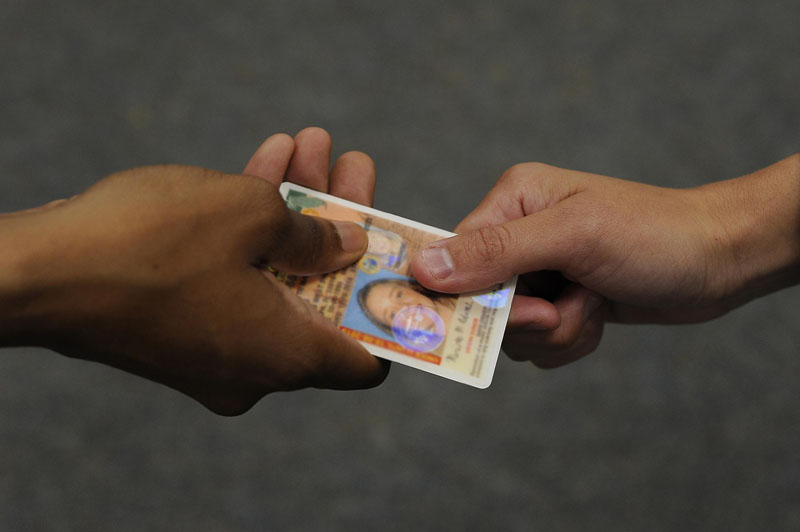
Deceptive Voting Practices – CFP 2008

(Image used under: Fair Use doctrine)

I'm at the Computers Freedom and Privacy conference of 2008 and I'm currently sitting in an interesting panel about something I had no idea about. I assumed that deceptive voting practices meant e-voting, but what they're actually talking about is modern-day Jim Crow laws.

I suppose I should have known better, but I wasn't aware that there were still problems with disinformation encouraging people not to vote. Often the misinformation will come in e-mail or physical mail and will seem very authentic appearing to have come from some state agency or well-known organization. They will try to discourage you from voting by telling you:

  • that due to massive expected turnout, Republicans would vote on election day and Democrats the day after (thus eliminating Democratic votes from the election).
  • that if you have unpaid parking tickets or child support, you'll be arrested when you go to vote
  • that the polling location has changed
  • that any ex-cons can't vote (note that this may be true depending on the state you're in, but be sure to check before deciding not to vote)
  • that the voting registration deadline has long passed so there's no point in even trying now

There's more, but that's a start. If anyone tells you that you can't vote for some reason or that your polling location/date has changed, verify the information before acting on it!

Tags: ,

How to Peel an Egg in 10 Seconds

Egg Peeling
(Image is in the Public Domain)

This is one of the coolest things I've seen and the best part is that it works! Take a hard-boiled eggs, crack and then tear a little bit of the shell from the top and bottom, blow into it and it pops right out! I was making egg salad yesterday and I found this tip online and tried it right then. 7 perfect eggs in a row.

The only thing this video and others like it doesn't tell you is when to do it (when they're still warm, cooled down, etc). I looked up some info that said to take the hot egg, run it under cold water for a few seconds, and then peel normally.

I combined the two and took my hot egg, ran it under cold water for about 8 seconds, cracked the top and bottom, tore a bit off each end and blew. Perfection.

Tags: , ,

Firefox 3 To Be Fastest Browser

(Image used under: Fair Use doctrine)

If there was a disadvantage to Firefox, it would be stability and memory. Those have apparently been fixed in version 3 (due out in June), but one of the most exciting features will be Firefox's brand new speed advantage.

Mozilla VP of engineering Mike Schroepfer claims that Firefox 3 is 9.3x faster than Microsoft Internet Explorer 7 and 2.7x faster than Firefox 2 in terms of JavaScript performance. In terms of Gmail message load time, he claims Firefox 3 is 6.8x faster than IE7 and 3.8x faster than Firefox 2. And he says Firefox 3 beats Apple's Safari, which is also faster than Firefox 2.
Tags:

Myths About Internet Sexual Predators

The truth about Internet creeps and how to defend your family against them
(Image is in the Public Domain)

Some very interesting facts from the Crimes Against Children Research Center:

In the vast majority of Internet sex crimes against young people, offenders did not actually deceive youth about the fact that they were adults who had sexual intentions. Acknowledging that they were older, the offenders seduced youth by being understanding, sympathetic, flattering, and by appealing to young people’s interest in romance, sex and adventure.

Although cases of abduction, forcible rape and murder have occurred, they are very rare. According to research looking at crimes ending in arrest, violence occurred in only 5% of cases. In most encounters, victims meet offenders voluntarily and expect sexual activity, because they feel love or affection for the person they have been corresponding with. Typically they have sex with the adult on multiple occasions. Most of these crimes are statutory rather than forcible rapes.

Virtually all cases of Internet sex crimes involve youth 12 and up. Most victims are ages 13 – 15. Younger children have much less interest than teens in interacting with and going to meet unknown persons they have encountered online. Avoid implying that the typical youngster vulnerable to online offenders is a young child.

Research has shown that simply posting or sending some personal information online does not put youth at risk. The reason is that most young people (like most adults) do give out personal information. It is hard to be online without doing so. A warning ("Never give out personal information online") that is so broad and runs counter to such common practices is not likely to make young people trust the source of such advice.

And a set of consolidated advice:

  1. Be smart about what you post on the Web and what you say to others. The Web is a lot more public and permanent than it seems.
  2. Provocative and sexy names and pictures can draw attention from people you don't want in your life.
  3. Sexy pictures can get you into trouble with the law. If you are underage, they may be considered child pornography, a serious crime.
  4. Be careful what you download or look at, even for a laugh. Some of the images on the Internet are extreme, and you can’t “unsee ? something.
  5. Going to sex chat rooms and other sex sites may connect you with people who can harass you in ways you don't anticipate.
  6. Free downloads and file-sharing can put pornography on your computer that you may not want and can be hard to get rid of . Any pornography that shows children or teens under 18 is illegal child pornography and can get you in big trouble.
  7. Adults who talk to you about sex online are committing a crime. So are adults who meet underage teens for sex. Some teens think it might be fun, harmless or romantic, but it means serious trouble for everyone. It’s best to report it.
  8. Don't play along with people on the Web who are acting badly, taking risks and being weird. Even if you think it's harmless and feel like you can handle it, it only encourages them and may endanger other young people.
  9. Report it when other people are acting weird and inappropriately or harassing you or others. It's less trouble just to log off, but these people may be dangerous. Save the communication. Contact the site management, your service provider, the CyberTipline or even the police.
  10. Don't let friends influence your better judgment. If you are surfing with other kids, don't let them pressure you to do things you ordinarily wouldn't.
  11. Be careful if you ever go to meet someone you have gotten to know through the Internet. You may think you know them well, but they may fool you. Go with a friend. Tell your parents. Meet in a public place. Make sure your have your cell phone and an exit plan.
  12. Don’t harass others. People may retaliate in ways you don’t expect.
  13. You can overestimate your ability to handle things. It may feel like you are careful, savvy, aware of dangers, and able to manage the risks you take, but there are always unknowns. Don’t risk disasters.

The above is documented in this PDF.

Tags: , ,

Malls Tracking Customer Movements Via Cellphones

(Image is in the Public Domain)

Lovely.

Customers in shopping centres are having their every move tracked by a new type of surveillance that listens in on the whisperings of their mobile phones.

The main point here is that business are highly interested in knowing everything they possibly can about you. The more then know, the more they can manipulate. Just wait until everything we're carrying has an RFID chip in it. That will make their jobs so much easier.

Tags: , ,

RFID Tracking Capabilities Exhibited at Conference

(Image used under: Creative Commons 2.0 [SRC])
As part of a social experiment, attendees at a hacker conference in July will be issued badges with electronic tracking devices. Large displays will show in real-time where people go, with whom they associate, for how long and how often.

Hopefully after seeing how easy it is to tag and track someone with RFID, people will become more aware of what a dangerous technology this could be if we don't pass strong privacy regulations to prevent their misuse.

Tags: ,

Computers, Freedom, and Privacy Conference of 2008 – Coming Soon!

(Image used under: Fair Use doctrine)

I'm really jazzed about going to this conference. They've got some really cool events lined up like:

Hate Speech and Oppression in Cyberspace
Kids taunting classmates (with resulting emotional scars and even suicide); harassment, stalking, and death threats; and organized and race-, gender-, religion-based hate groups; prominent bloggers like Kathy Sierra and Blackamazon have take their blogs down after death threats or attacks ... along with all its promise and power of cyberspace, the Internet also distributes words and images of hate that often lead to real-world violence.

And

Activism and Education Using Social Network

We plan on examining several different types of social networks. Some of these networks are geared toward sending out 'news blasts' to your network of friends, while others support having a much deeper conversation about the topic at hand. Protest groups on Facebook can quickly grow to over a million people– and lead to millions demonstrating in the real world. New technology such as "causes," now available both on Facebook and MySpace, allows for fundraising and eases recruiting. Easy sharing can increase the viral spread of videos and web pages. Innovative mashups like those promoted by Netsquared with their Mashup Challenge make information and calls to action more easily available to more people. We'll survey the available functionality and describe how to use the different variants for education and activism activities, as well as giving tips on how to become part of the particlar social network community that the participant is interested in.

The program is here, but you only have a few more days to sign up so get on it!

Tags: ,

Man Spends 3 Million in only 3 Months on ID Theft

ID Theft is too easy to do
(Image is in the Public Domain)

Using only a photocopy of a driver's license and a social security number, James Harman bought over 3 million dollars worth of goods in his brother's name.

The most important point to this story? It wouldn't have happened in the first place if he'd had a credit freeze, but it still would have even if he'd had any kind of monitoring or insurance plan (even Lifelock).

Tags: ,

The Best Super-Power Ever

Heroic
(Image used under: Fair Use doctrine)

There have been a rash of really good superhero movies recently with the most current being the much-touted Iron Man (which I've yet to see so don't spoil it!) and Batman Begins (not only the best Batman movie ever, but one of the best movies ever made in my opinion).

Haven't you ever asked yourself, 'How cool would it be to have a superpower?
One question that always pops into our minds (ok, my mind) when watching these movies is, how cool would it be to have that power? How cool would it be to have a super-power at all! But what super-power would be best?

Well today, I give you that answer.

I thought long and hard about what powers would be most useful and powerful and there's many to choose from (Telekinesis, Mind-Reading, Shapeshifting, Illusion, and on and on). The problem is that each has a weakness or a situation that renders it useless.

Illusions don't work on machines and won't help you stop a bullet or save your darling as she plummets to her death from a tall building. So maybe go to Telekinesis to save your falling damsel, stop the bullet, and toss those robotic enforcers across the horizon, but then what about that secret poison needle that your "darling" is planning to betray you with? Mind-reading will come in very handy here, but is no good for attack dogs, Mexican wrestlers, or being pushed out of an Airplane. You see how this can go on for a while…

One superpower to rule them all...

Anyway, after long and hard deliberation, I've come up with a power that would fit nearly every need and be useful for everything from falling pianos to sticking your foot in your mouth. Undo.

That's right, undo. Imagine:

You spend four hours haggling on the price of a car and take it just a little too far. Undo the last thing you said and try again.

The red and blue lights flash behind you, undo, slow down, pass the speed trap, speed back up to 92 miles per hour.

Three words: Stocks, Racetrack, Vegas

Think of the possibilities!

Your wife gave you specific instructions to keep the dog in while she was gone, but during the game, someone comes to your door to tell you they just ran over a dog and they think it's yours. Undo, pause the game, get the dog, resume the game.

A guy breaks into your house which you find out only after they're standing over your bed with a gun telling you to "get up mutha*****!!". Undo, meet them at the door with a shotgun.

You just stepped off a curb and the blare of a horn announces your imminent grisly demise at the hands of a truck's grill. Undo, stay at the curb and let the truck pass.

And it doesn't have to be just once. If you turn down a street and get mugged only to undo and try a different street and get mugged again, go back a little earlier to when you left the hotel and take a cab instead.

If there's a limit to how far you can go, it's based mostly on how much of your life you want to relive. Maybe you just want to try the whole day over again. Maybe you made a horrible mistake a week ago, but didn't realize it until just now. Maybe you developed cancer months ago and if they had known then, you'd have survived. UNDO!

The Super-hero Gig

Maybe you can't stop a bank robbery, but you'd be able to call the SWAT team in at just the right time. Maybe you can't stop a meteor from coming down on your house, but you can back up a week and say, "Let's move! RIGHT NOW". You can't stop the violence in Iraq, but you could certainly help as an informant and keep yourself from getting killed if you went there.

Sure you don't get the glory of being in tights and impressing the all the chicks, but you'll never have to worry about missing a deadline, saying the wrong thing, being in the wrong place, or betting on the wrong horse.

The only two questions left are, what do you call yourself and is there any type of super-villain that could defeat you?

Tags:

Viral Videos Replacing Ads, Generate Interest

(Image used under: Creative Commons 2.0 [SRC])

There are some companies that seem to be making videos for YouTube that don't specifically mention any products, but feature the products prominently none-the-less. At least one person has noticed the trend and reported on it in at least two videos, one that has already been proven to be an ad and the other only just released.

Obviously the new ad has the same goals as the old: to market a product without actually naming it, by appealing to the public's love of Internet stunt videos.

I don't really have a problem with this. They're getting attention for the product with legitimate interesting videos. Whether a pro company made it or not, the stunts are pretty interesting and people are watching it for that. Assuming they're not trying to give the impression that these are amateur videos anyway.

Tags: , ,

Loading...

If you want to learn more about my professional background, click here to learn more.

Check out one of my guides/tutorials:

computer security Tutorial
|INDEX|next: Spyware Scanners

Security Software

Make sure you have a up-to-date Anti-Virus Program to protect you against bad websites or files.
Sometimes spyware gets in your computer and the anti-virus won't stop it. Use a spyware scanner to find and remove spyware and adware.
Use a software firewall to detect bad code on your computer when it tries to connect to the Internet.
Always keep your system up to date with security patches or none of the rest of your security software will matter.
Use an encryption tool to protect your important data when storing or transmitting it.
Switch to Firefox for your web browsing and you'll be better protected from Internet threats.

Safe Computing Practices

Don't get tricked by fake alerts or clever webpages into downloading viruses or spyware!

... or check out any of my other guides and tutorials by clicking here!

Anti-Virus

A virus can come from files, e-mails, web pages, or even devices you plug in (like thumbdrives or printers) and destroy your files or your computer once they get in. An anti-virus is software designed to detect and prevent that from happening.

[Click for full description]

Spyware Scanners

Learn how to detect and remove spyware and adware using a free scanning tool.

[Click for full description]

Software Firewall

Learn what a firewall is and why you want one on your computer.

[Click for full description]

Operating System Updates

Make sure to keep your operating system up-to-date with security patches or else none of the rest of your security software will be able to protect you.

[Click for full description]

File Encryption

Learn how to protect your important files on your computer or when transmitting them with free tools for file encryption.

[Click for full description]

Mozilla Firefox - Internet Browser

There are many browser choices out there. Read why I think Firefox is one of the best.

[Click for full description]

Fake Alerts

Maybe you've done everything right and you're computer is sufficiently fortress-like, but then you or someone in your family falls for a simple scam that tricks them into directly installing the bad guy's virus! Learn how to spot and ignore fakes!

[Click for full description]